Illustrative image
Bovora
Waterproof rubber repair tape for leaks and cracks
Get it between Tuesday 10 November and Thursday 12 November
No card: you pay the courier in cash.
Sold by Extrapy · Pay on delivery · WhatsApp
By law: 14 days to return your order · 3-year legal guarantee
What it does
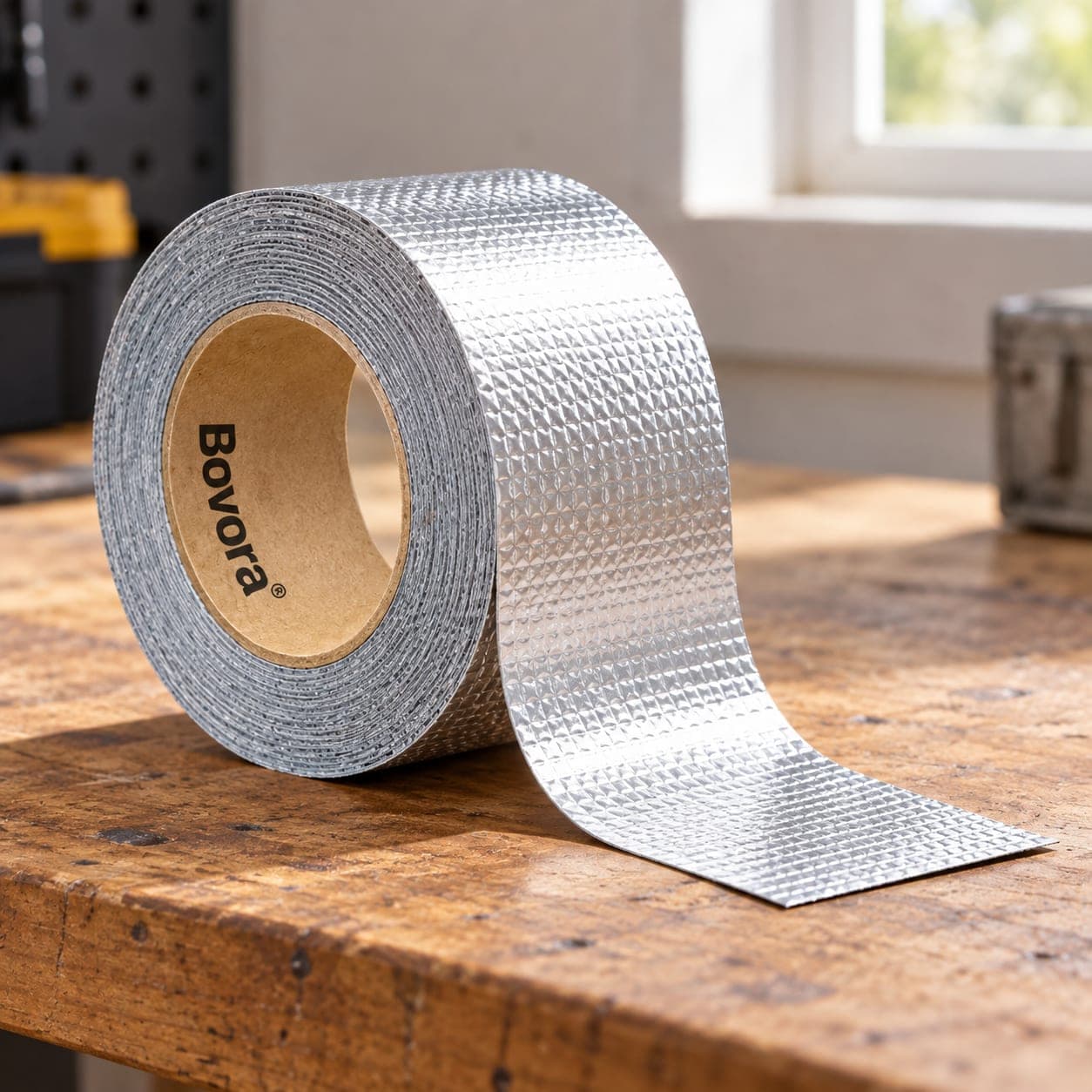
A wide rubber tape with a thick layer of adhesive for covering cracks, holes and small leaks in pipes, gutters, buckets, tarps or hoses. Cut it with scissors, press it onto the clean area and it forms a barrier against water while you plan the permanent repair.
Specifications
| Product type | Self-adhesive waterproof rubber repair tape |
|---|---|
| Materials | Synthetic rubber backing; butyl adhesive; silicone-coated paper liner |
| Roll size | 10 cm wide × 1.5 m long; approx. 1 mm thick |
| Surfaces | PVC, rigid plastic, metal, wood, ceramic, tarpaulin and rubber, clean and dry |
| Adhesion and water resistance | As per manufacturer data sheet; suitable for continuous contact with cold, unpressurised water |
| Service temperature | Apply between 5 and 40 °C; use between −20 and 60 °C |
| Weight | Approx. 250 g |
| Colour | Black |
| Guarantee | 3-year legal guarantee |
What's in the box
- 1 roll of Bovora waterproof repair tape
- Instructions for use on the packaging
- Cardboard box for storing the roll
Read the full description
Bovora is a waterproof rubber repair tape, wide and with a thick layer of adhesive, made for covering cracks, holes and small leaks while you arrange the permanent repair. It is for anyone who wants a quick fix to hand at home, in the garage, in the garden or in the van, with no mixing and no special tools: just a pair of scissors.
Tape for water leaks in pipes and hoses
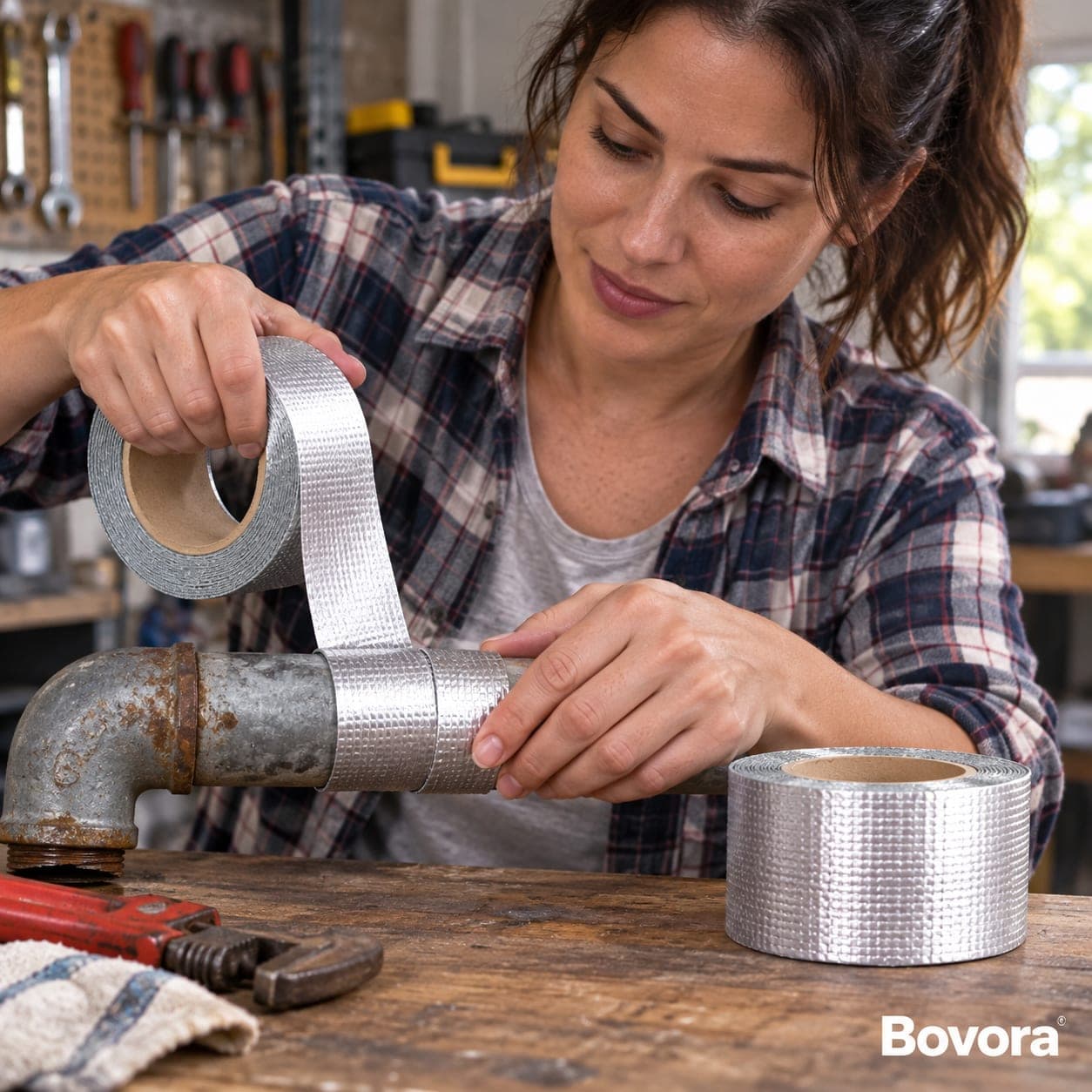
A drip in a waste pipe, a split garden hose or a seeping joint are the typical cases. The rubber backing stretches just enough to wrap round the pipe and the adhesive layer fills small irregularities in the surface. With several overlapping turns the patch sits more firmly.
Bear in mind that on a pipe under mains pressure it is a temporary fix: the right thing is to turn off the stopcock, apply the tape and call a plumber or replace the damaged section as soon as you can.
Tape for repairing gutters and covering cracks outdoors
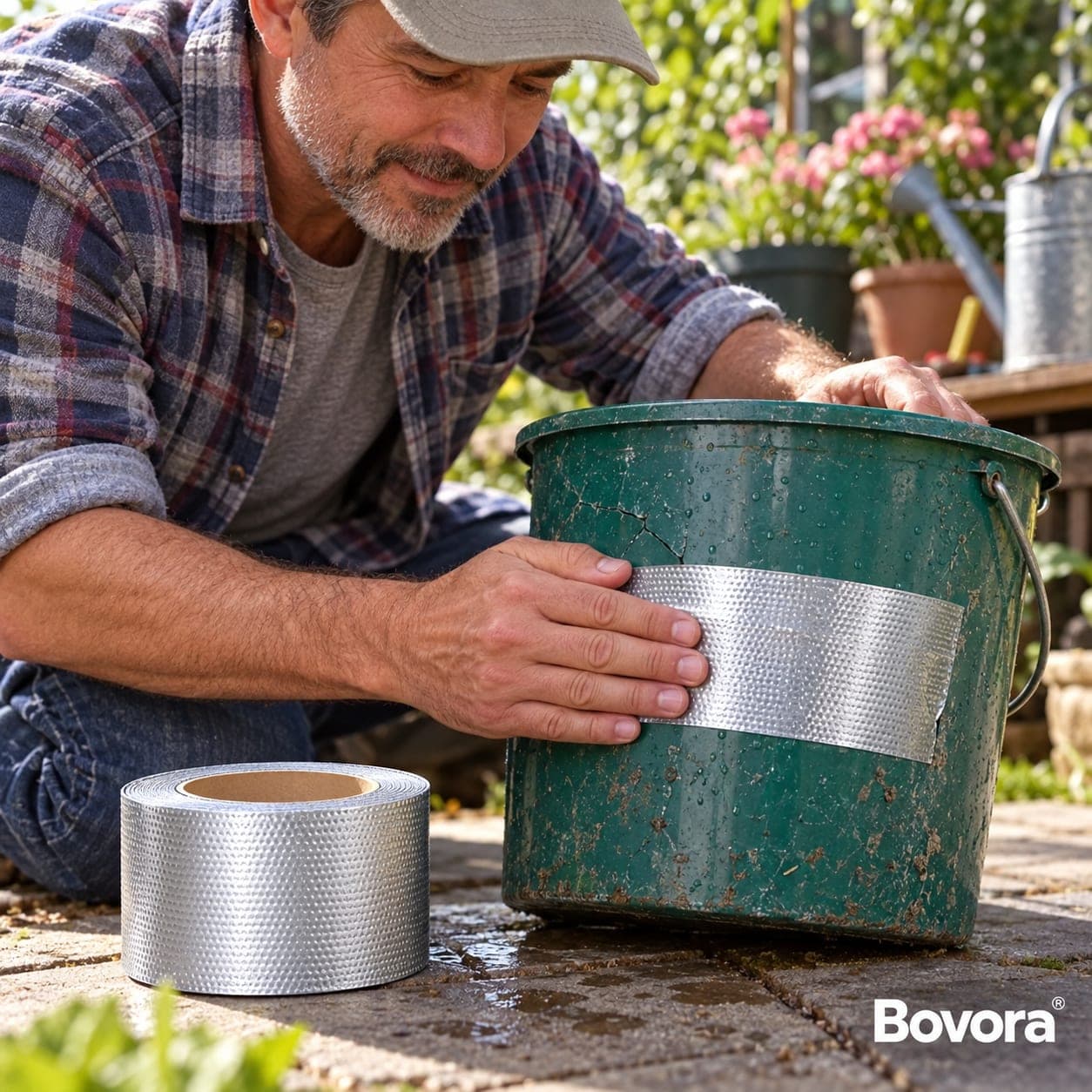
Its width lets you cover an open gutter joint, a crack in a plastic tank or a hole in a tarp in a single strip. Being rubber, it follows curves and edges without creasing as much as duct tape. On roofs, use it just as a temporary fix for one specific spot, not to waterproof large areas.
A rubber sealing tape you cut to size
It cuts with ordinary scissors, so you can make a small patch for a cracked bucket or a long strip for a pipe. Rounding the corners of the patch helps stop the edges lifting when something rubs against them. Adhesion on each material and water resistance are listed in the specifications table.
How to use it
Turn off the water
If it is a pipe, close the stopcock before you start.
Clean the surface
Remove dust, grease, mould and any flaking coating. If you can, dry it with a cloth.
Cut and peel the liner
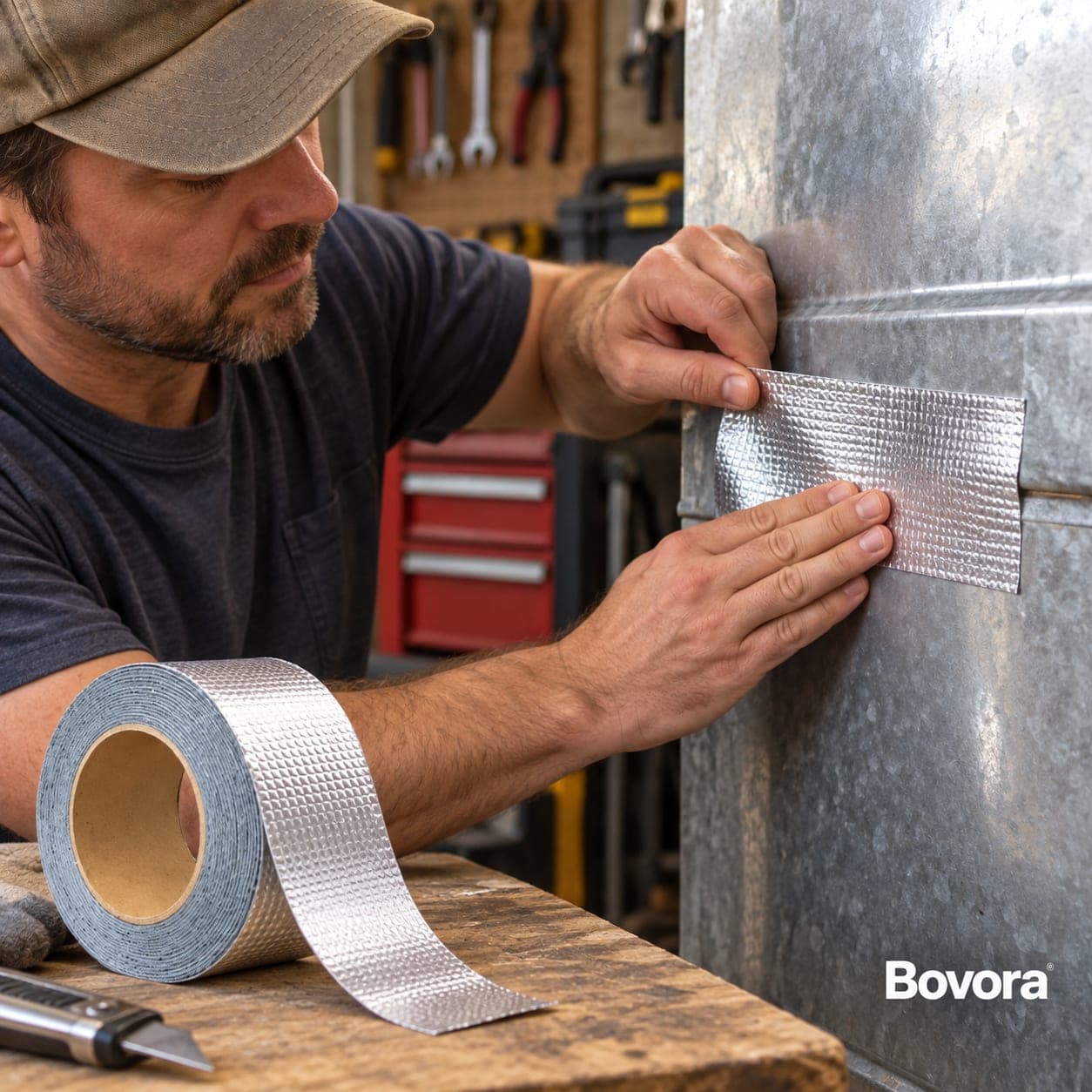
Cut a piece that overlaps the crack on every side and peel off the protective liner.
Press firmly
Lay the tape on and press from the centre out to the edges by hand to push out the air.
Check the repair
Wait the time stated on the packaging before turning the water back on, and check the patch again after a few hours.
Care and storage
Keep the roll in its box or in a sealed bag, somewhere cool and out of the sun, so the adhesive does not dry out or pick up dust. Put the protective liner back over the cut end. Check patches exposed to the weather from time to time and replace them if the edges start to come away.
Frequently asked questions
Does waterproof repair tape work on a leak in a pressurised pipe?
It can slow a small drip until the plumber arrives, but on a pressurised pipe it is always a temporary fix. Close the stopcock, dry the area, wrap several overlapping turns and open the water again gradually. Do not use it on gas or hot water pipes.
Can it be used as waterproof tape for roofs?
It works as a temporary cover for one specific spot, such as a cracked tile, a flashing or a skylight joint, until the repair is done. It is not meant for waterproofing a whole roof. Working on a roof carries a risk of falling: if it is not safely accessible, call in a professional.
Does it stick to wet surfaces?
It sticks best to clean, dry surfaces. If you cannot dry the area completely, remove as much water as you can with a cloth and press the tape harder and for longer. If the manufacturer confirms it can be used on wet surfaces, you will see it in the specifications table and on the packaging.
How is it different from duct tape?
Duct tape is thin, made of coated fabric, and works well for holding or bundling things. A rubber sealing tape is thicker, stretches and adapts better to curves and uneven surfaces, so it is better suited to covering cracks and small leaks. Neither replaces a permanent repair.
Can it be removed later without leaving residue?
As a tape with a thick adhesive, it will usually leave some residue when removed, especially if it has been on for a while or in the sun. This usually comes off by rubbing with a little oil or an adhesive remover, testing on a hidden spot beforehand.
Does it work as tape for repairing metal gutters?
Yes, as long as you clean the area well: remove leaves, loose rust and dirt, and let it dry before applying the tape. On metal it is even more important to round the corners of the patch and press the edges down well. Compatible surfaces are listed in the specifications table.