Illustrative image
Tavina
Electric cleaning brush with interchangeable brush heads
Get it between Tuesday 10 November and Thursday 12 November
No card: you pay the courier in cash.
Sold by Extrapy · Pay on delivery · WhatsApp
By law: 14 days to return your order · 3-year legal guarantee
What it does
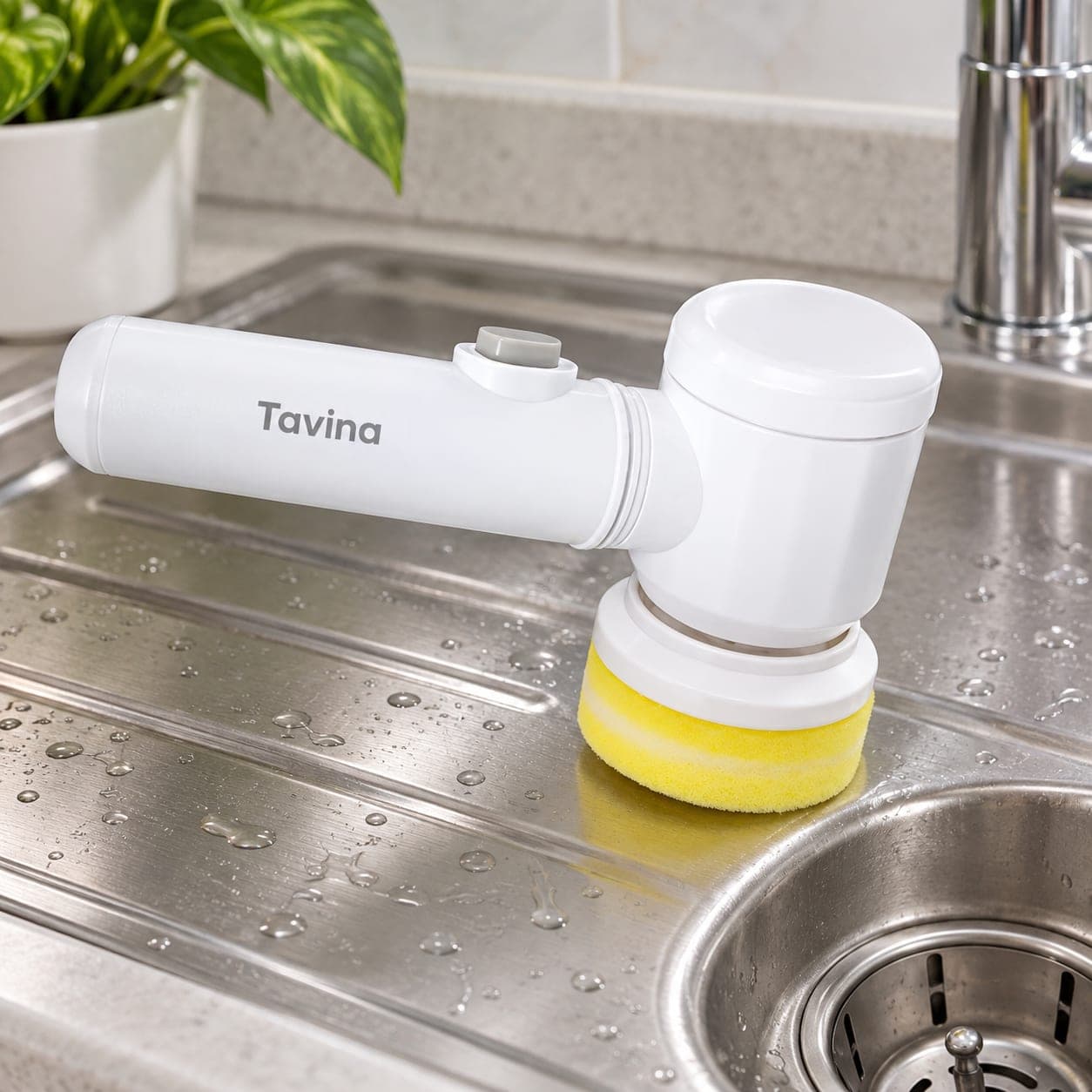
A handheld electric cleaning brush, rechargeable and cordless. The head spins and does the scrubbing on grout, taps, tiles, sinks or the soles of trainers. It comes with three interchangeable heads so you can adapt it to wide surfaces as well as narrow corners.
Specifications
| Product type | Handheld electric spin cleaning brush |
|---|---|
| Brush heads | 3 interchangeable: wide flat, small round and pointed for grout |
| Battery | Rechargeable lithium, 1200 mAh, charged by USB cable |
| Running time and charging time | About 60 minutes of use; about 3 hours to charge |
| Water resistance | Splash resistant, not submersible |
| Materials | Plastic body and nylon bristles |
| Size and weight | 15 x 7 cm without the head; 200 g |
| Compatibility | Tiles, grout, taps, sanitary ware, sinks, stoneware and shoe soles |
| Colour | White |
| Guarantee | 3-year legal guarantee |
What's in the box
- 1 handheld electric brush
- 3 interchangeable brush heads
- 1 charging cable
- Instructions for use
Read the full description
Tavina is a handheld electric cleaning brush: a handle with a motor and a rechargeable battery that spins a bristle head. Instead of scrubbing with a scourer yourself, you bring the brush to the dirt and the spinning does the work. It is made for the small, tedious areas of the house: tile grout, the base of the taps, the corners of the shower, the sink or the soles of your trainers.
Rechargeable spin brush: the spinning scrubs for you
Press the button and the head spins continuously. You simply guide it over the dirt with light pressure, without the to-and-fro arm movement an ordinary brush demands. You notice it most in repetitive jobs, such as going over all the grout lines on a wall.
It runs on a battery, so there is no cable in the way and no need for a socket nearby. Take it from the bathroom to the kitchen or the terrace and, when it runs down, recharge it with its cable.
An electric brush with interchangeable heads
The box contains three heads of different shapes and sizes, which you swap by hand in a few seconds. The wider ones cover more surface on tiles, shower trays or sinks; the narrower ones get into grout lines, plugholes, shower-screen tracks and around the taps.
Having several also helps you keep uses apart: one for the bathroom, one for the kitchen and one for footwear.
An electric cleaning brush for the bathroom, kitchen and trainers
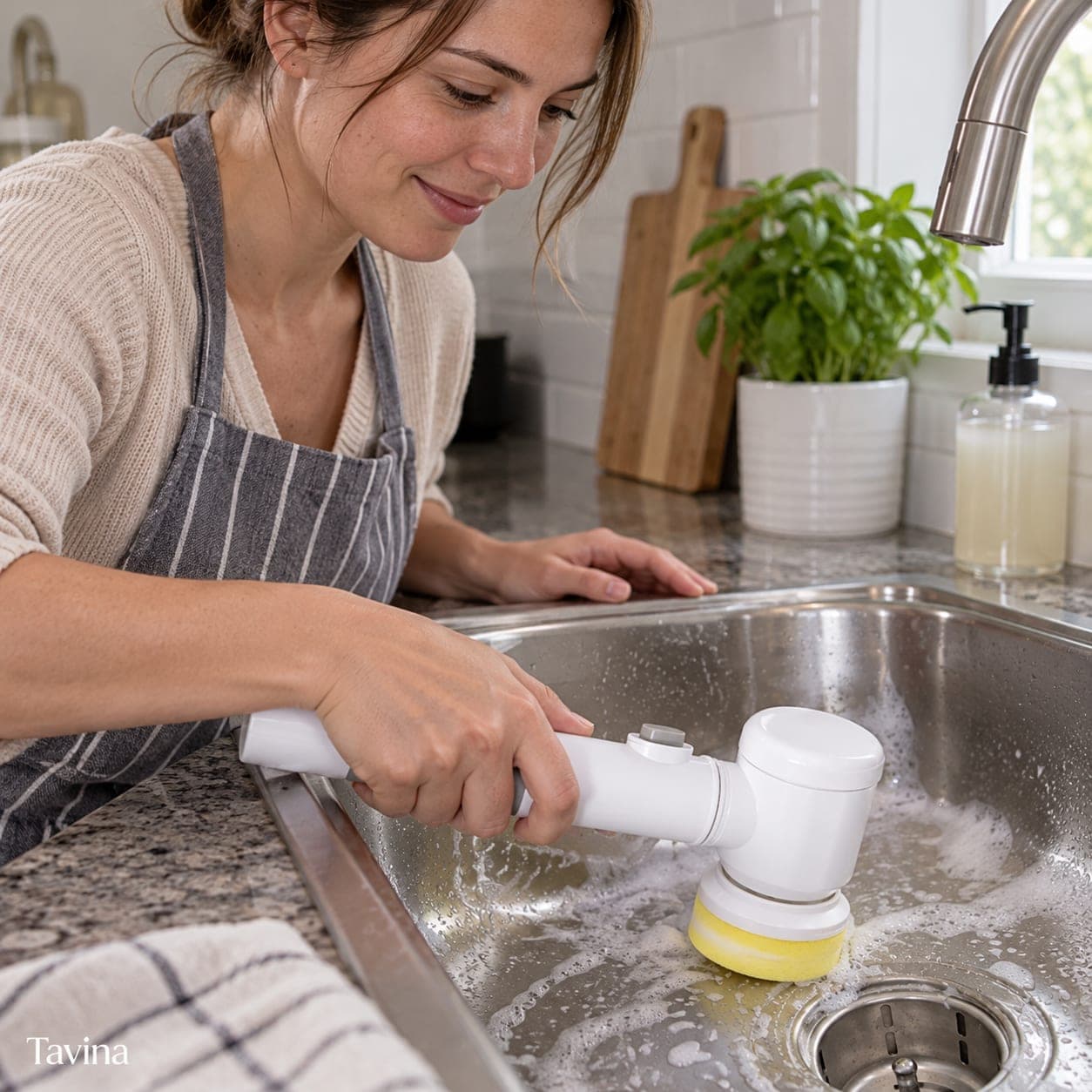
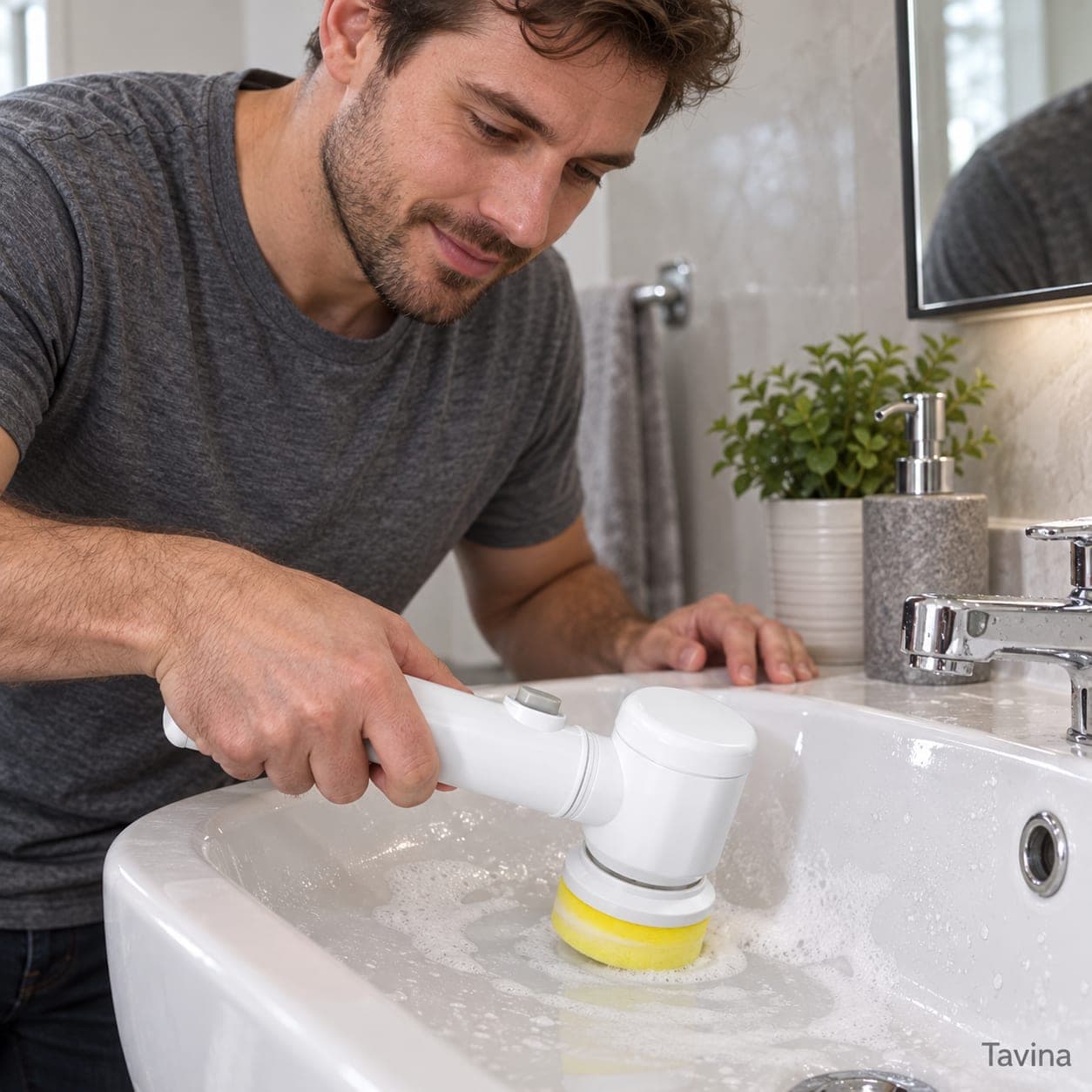
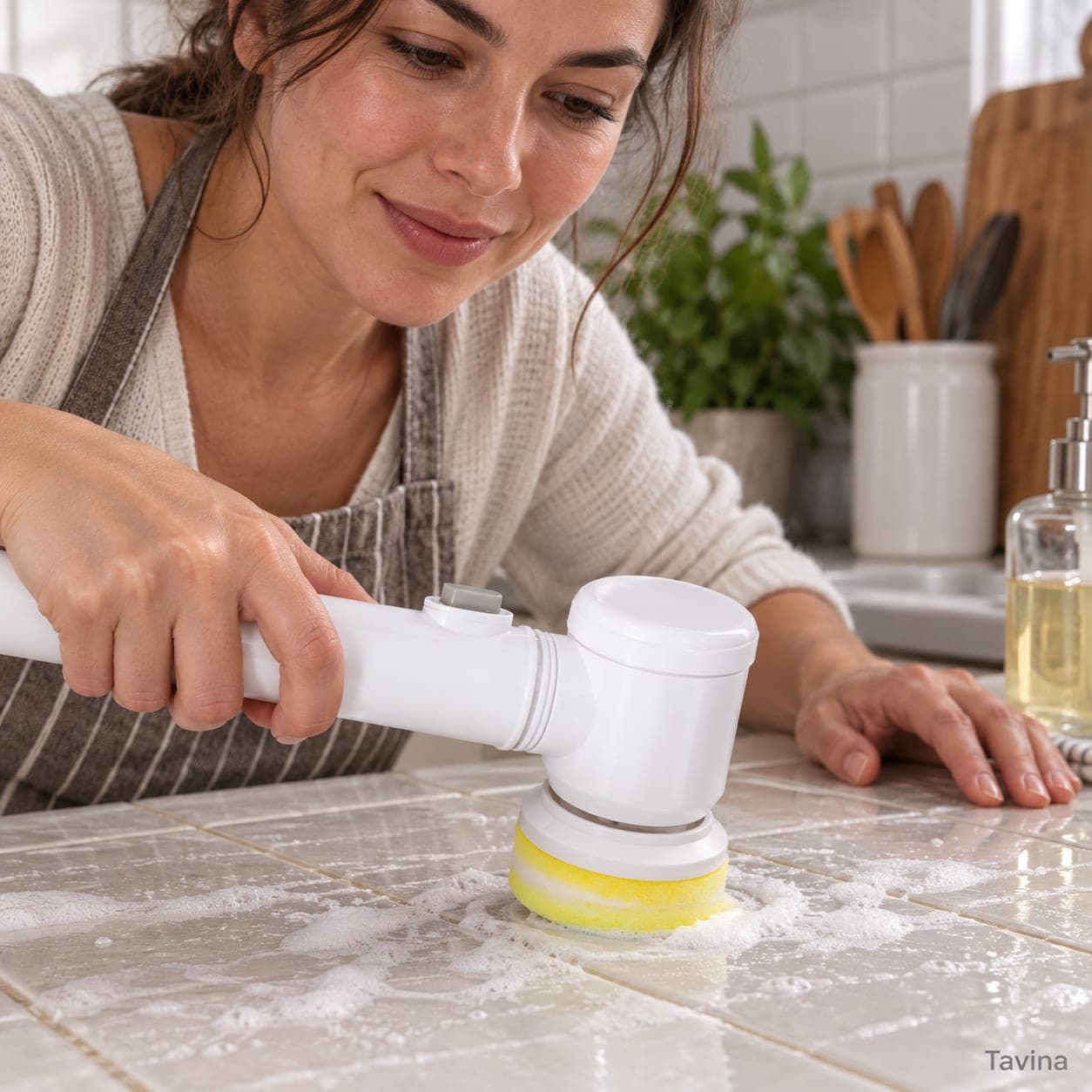
In the bathroom it goes over the grout, the base of the taps, the rim of the plughole and the corners of the shower. In the kitchen, the sink, the hob area and the edges of the worktop. Outside, the soles of trainers, bike rims or garden furniture.
Use it with water and your usual cleaner. On surfaces that scratch easily, such as polished steel, acrylic or lacquered finishes, test beforehand on a spot that is out of sight.
How to use the electric cleaning brush
Charge it before you start
Connect the charging cable and wait until the battery is full. Unplug it before use.
Choose and fit the head
Fit the head that best suits the area and press until it sits firmly.
Wet the surface and add cleaner
Dampen the surface and put a little product on it or on the bristles.
Switch on and guide without pressing
Press the button and move the brush slowly. Let the spinning do the work: if you press hard, the head slows down.
Rinse and dry
Remove the dirt with water or a cloth, switch the brush off and rinse the head.
Care and maintenance
After each use, take the head off, rinse it under the tap and let it air dry with the bristles facing down. Wipe the handle with a damp cloth and dry it; do not submerge it in water. Always charge it with the handle dry and store it somewhere free of damp. With use, the bristles splay: when a head is badly misshapen, stop using it on delicate surfaces.
Frequently asked questions
Is the electric brush good for tile grout?
Yes, it is one of its most frequent uses. Fit the narrowest head, wet the grout, apply your cleaner and move the brush slowly along the line. On grout with very old dirt, let the product act for a few minutes beforehand and repeat the pass; the original colour of badly aged grout cannot always be recovered.
Can it be used as an electric brush for cleaning trainers?
Yes. It works well on soles, rubber toe caps and edges, with lukewarm water and a little mild soap. On delicate fabrics, suede or leather, move the brush without pressing and test beforehand on a spot that is out of sight. Keep one head for footwear and do not mix it with the one for the kitchen.
How is the rechargeable spin brush charged?
It has a rechargeable battery, so it works without cables while you clean. It charges with the cable that comes in the box; the type of connection, the running time and the charging time are listed in the specifications on this page. Dry it well before plugging it in and do not use it while it is charging.
Can it get wet or be used inside the shower?
The heads can get wet without any problem and are rinsed under the tap. The handle contains the motor and the battery: it can work on wet surfaces, but it must not be submerged or held under running water. Check its water resistance in the specifications and always dry it after use.
Which cleaning products can be used with the brush?
Soapy water, washing-up liquid or the bathroom or kitchen cleaner you normally use. Avoid mixing products together, especially bleach with ammonia or with limescale remover, and rinse the head well when you finish. As the spinning can splash, switch the brush on once it is resting on the surface and, with strong products, wear gloves and glasses.
Can it scratch delicate surfaces?
The bristles are plastic and are intended for tiles, porcelain, taps and stoneware. Even so, on soft or glossy finishes, such as acrylic, polished steel, varnished wood or lacquered surfaces, any brush can leave marks. Test beforehand in a corner that is out of sight and use little pressure.