Illustrative image
Filena
Wall and ceiling mop with extendable handle and wringer
Get it between Tuesday 10 November and Thursday 12 November
No card: you pay the courier in cash.
Sold by Extrapy · Pay on delivery · WhatsApp
By law: 14 days to return your order · 3-year legal guarantee
What it does
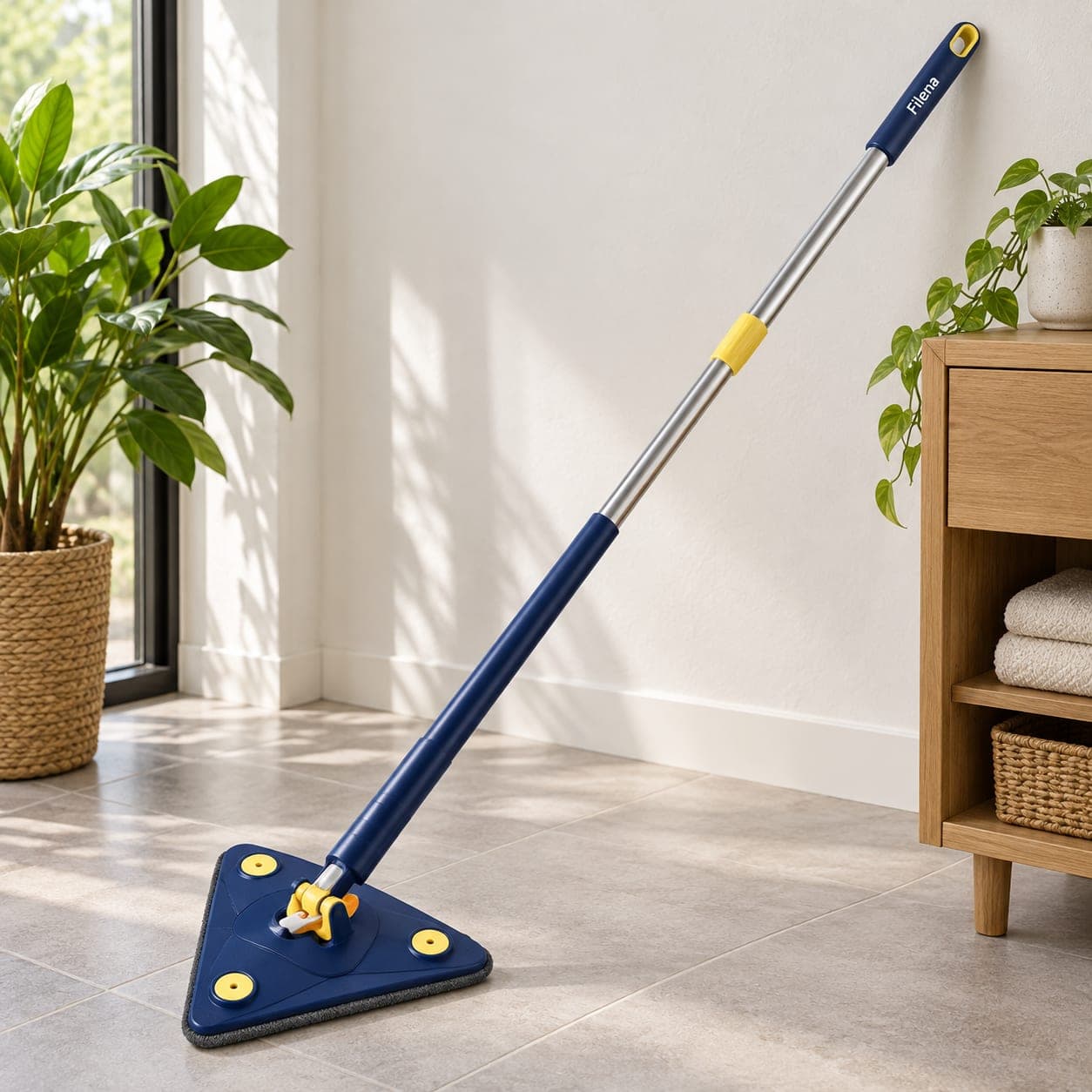
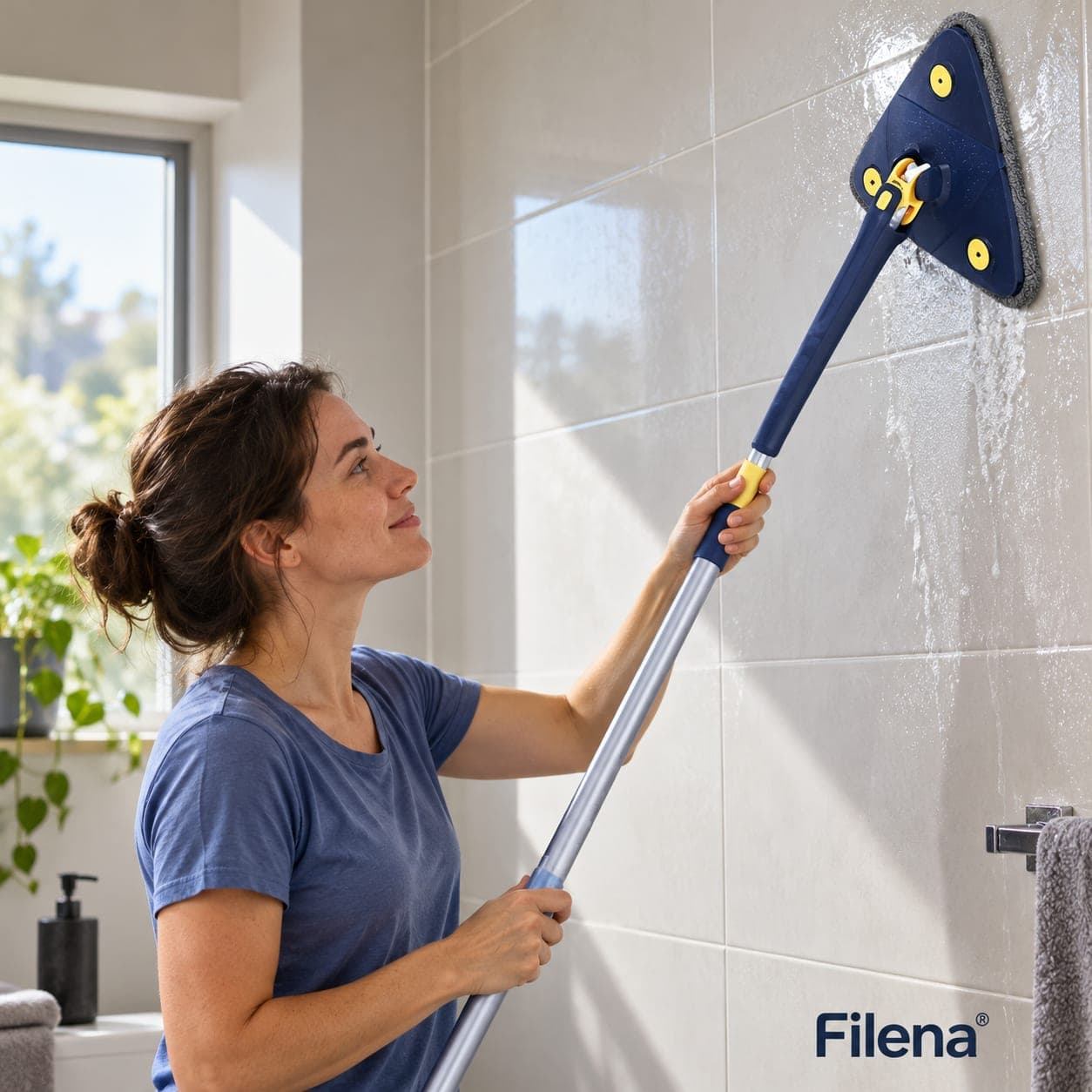
A manual mop with a triangular head and a long extendable handle, made for the high places: walls, ceilings, windows, corners and the tops of wardrobes. The head pivots to lie flat on the surface, and the microfibre pad is wrung by sliding a part of the handle, without touching it.
Specifications
| Product type | Manual mop with a swivelling triangular head, extendable handle and wringer |
|---|---|
| Materials | Stainless-steel handle, plastic head and microfibre pad |
| Handle length | Extends in sections, from about 85 to about 130 cm |
| Head size | Triangle with sides of about 24 cm |
| Weight | About 450 g |
| Pads included | 1 microfibre pad, removable and washable |
| Wringing | Sliding wringer on the handle that folds the head; no bucket needed |
| Compatibility | Smooth washable ceilings and walls, tiles, glass, furniture and floors |
| Colour | Navy blue with orange details |
| Guarantee | 3-year legal guarantee |
What's in the box
- Extendable handle, in sections
- 1 triangular head with wringer
- 1 washable microfibre pad
- Assembly and use instructions
Read the full description
Filena is a mop for walls and ceilings: a manual mop, with no motor or batteries, that has a flat triangular head and a long handle that extends in sections. It is made for the surfaces above and around you, the ones that hardly ever get cleaned because they mean fetching the ladder: the tops of wardrobes, high tiles, the ceiling, windows and corners. It mops floors too, although that is not where you notice it most.
A mop for cleaning walls and ceilings without a ladder
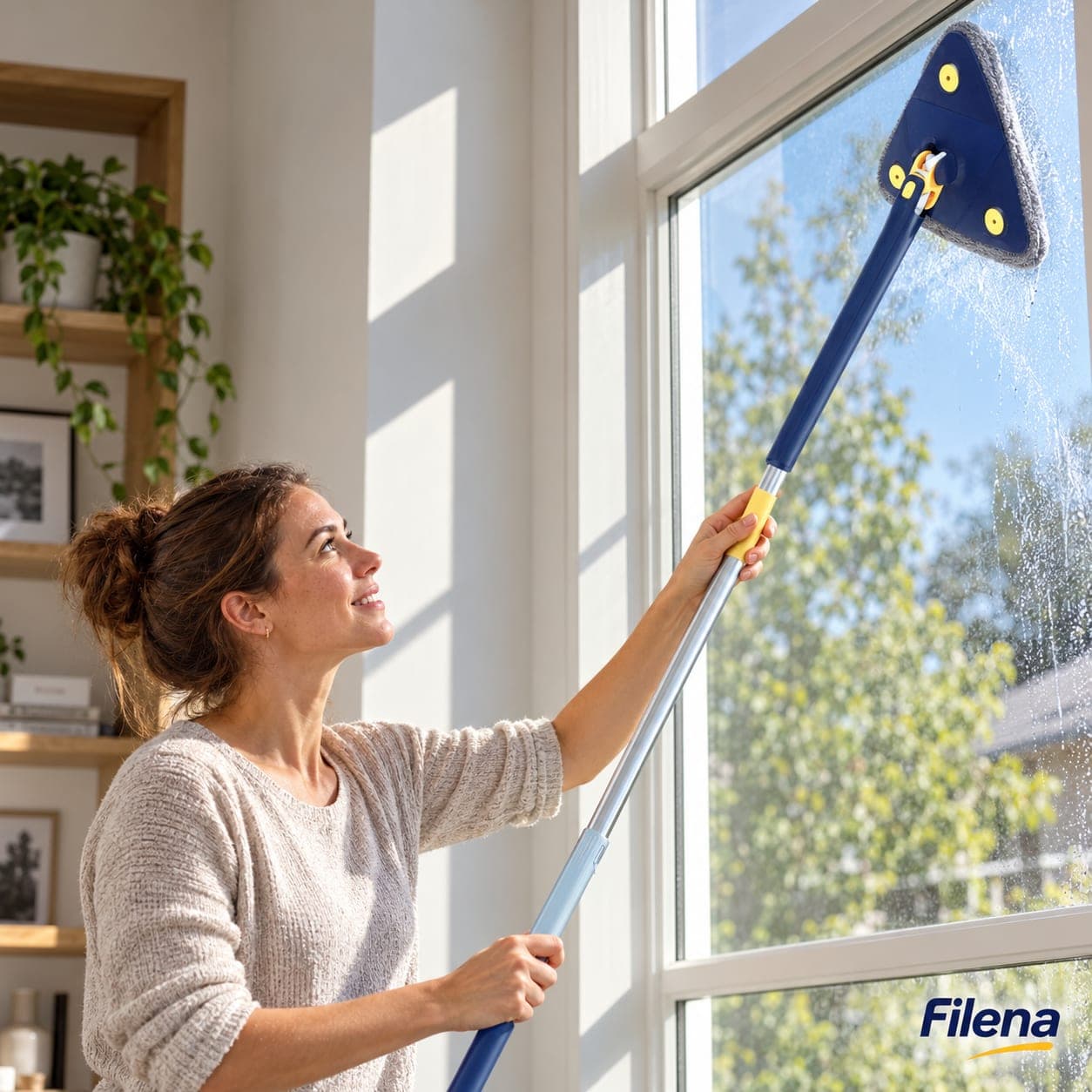
The handle goes together in sections and extends until it gives you the reach you need. Shortened, you clean at mid height; extended, you reach the line where the wall meets the ceiling with your feet on the floor. The head weighs little, and you appreciate that when it has to be held up high for a good while.
Dry, the microfibre pad catches the dust and cobwebs on cornices and on the tops of furniture. Damp, it goes over tiles, doors and walls finished in a washable coating.
A triangular head that pivots: corners, nooks and skirting boards
The head is joined to the handle by a pivot: it tilts and turns until it lies flat against the surface, even if you hold the handle at an angle. That is why you can move from the ceiling to the wall, or from the wall to the skirting board, without letting go of the handle or bending down.
The triangle ends in a tip, and that tip is what gets into the nook where two walls and the ceiling meet, into the corner of a window frame or between the skirting board and the door jamb.
A mop with the wringer on the handle, no bucket
You do not touch the pad to wring it. There is a sliding wringer on the handle: as you push it down, the two wings of the head fold against each other and squeeze the pad until the water comes out. Pull it back up and the head opens again.
As it weighs little and folds in on itself, you can wring it over the kitchen sink or the washbasin, with no bucket.
A mop for cleaning tiles, windows and glass doors
On tiles, windows and glass doors the head works flat: you rest it at the top and bring it straight down to the floor. To keep the glass free of streaks, use little water and a freshly rinsed pad. On top of the head there are round caps that open so you can pour water or a little cleaner straight onto the pad, without lowering the mop to the bucket each time.
How to use the wall and ceiling mop
Put the mop together
Join the handle sections, fix the head and put on the microfibre pad. Set the handle to the length the area calls for.
Start dry
Run the dry mop over ceilings, cornices and the tops of furniture to remove dust and cobwebs.
Dampen and wring
Wet the pad, push the wringer down the handle over the sink and repeat until it stops dripping.
From the ceiling to the skirting board
Do the ceiling to begin with, then the walls and the glass, and end at the skirting board and the floor.
Rinse the pad
When it looks dirty, rinse it under the tap, wring it and carry on.
Care and maintenance
When you finish, take the pad off the head and wash it with lukewarm water and soap. Avoid fabric softener, which makes it less absorbent, and wait until it is dry before fitting it again. The head and the wringer just need a rinse under the tap to get rid of fluff and soap residue. Shorten the handle and leave the mop standing or hanging somewhere airy, never folded and damp inside a cupboard.
Frequently asked questions
Can I use this mop to clean painted walls?
Yes, if the finish is washable, as most modern emulsions are. Go over the wall dry to begin with to remove the dust, then with the pad wrung out very well, without soaking the wall. Test on a spot that is out of sight. If the finish is not washable, use the mop dry and nothing else, because water can leave marks.
How do I clean the ceiling without a ladder using this mop?
Extend the handle until the head rests flat on the ceiling without having to stretch your arms right out. Start dry, in strips, to pick up dust and cobwebs. If you then go over it damp, wring the pad until it stops dripping and keep away from lamps, detectors and electrical fittings. Wear glasses if dust falls.
Can it be used on stippled, rough-textured ceilings and walls?
With care. The raised texture of a stippled finish can snag the fibres of the pad, so use it dry, without pressing and always in the same direction, to remove dust and cobwebs. Using it damp is not a good idea unless you know what the finish is: test in a corner beforehand, because some soften with water.
Does it need a special bucket to wring it?
No. The wringer is on the handle itself: you slide it down, the wings of the head fold together and squeeze the pad. You can do it over the kitchen sink, the washbasin, the bath or any bucket or bowl you have. Your hands do not touch the wet pad at any point.
Does it work for mopping the floor as well?
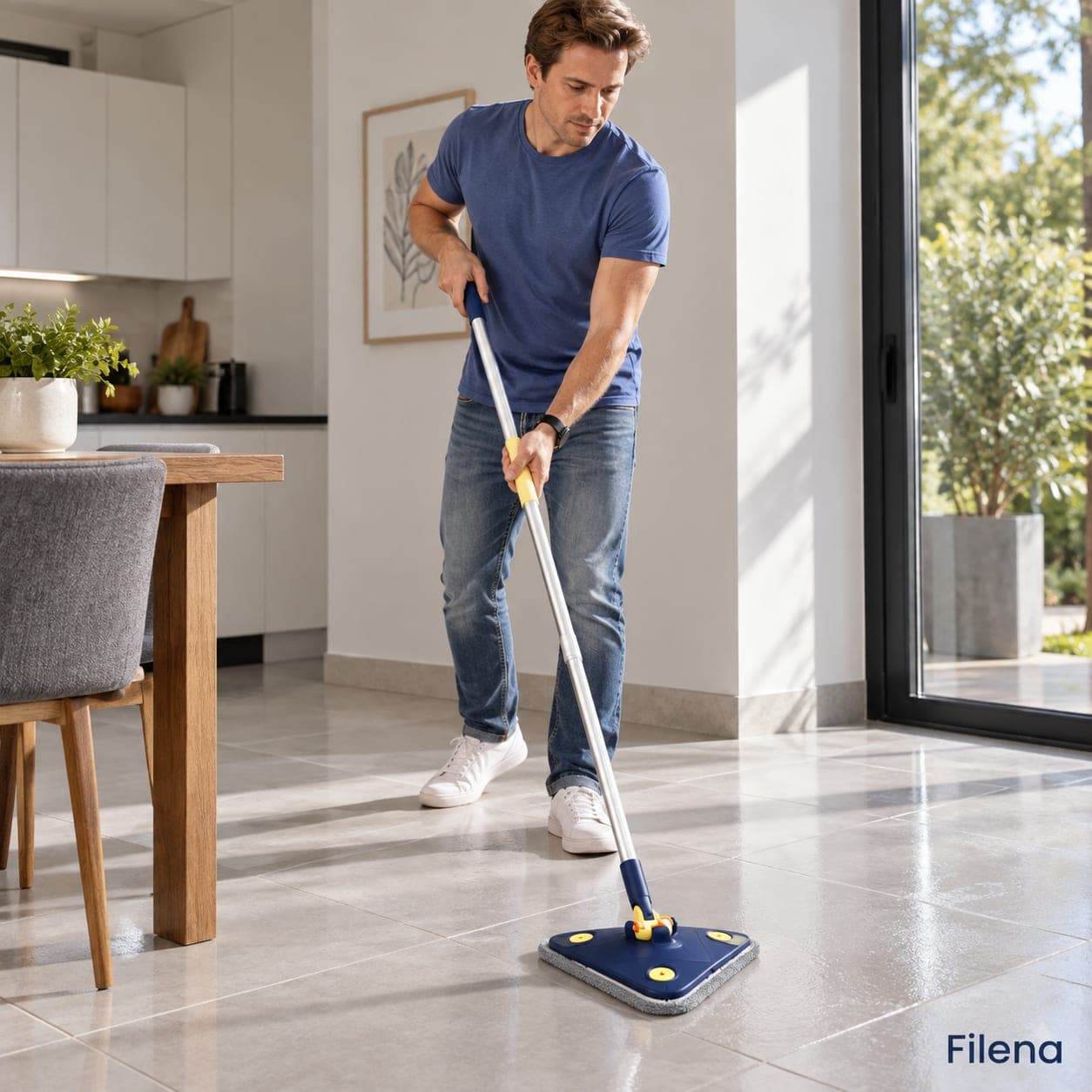
Yes, it mops tiled, vinyl or laminate floors with the pad well wrung out. Its head is smaller than that of a floor mop, so a large room will take you longer. Where it works best is in bathrooms, narrow hallways, under furniture and in the corners, which it reaches with its tip.
Can it clean the outside of the windows?
Just when you can do it with both feet on the floor: a glass door from the terrace, or the outer face of a window that opens inwards. Do not lean out or put your body through the window to reach a fixed pane; that calls for a different system or a professional.