Illustrative image
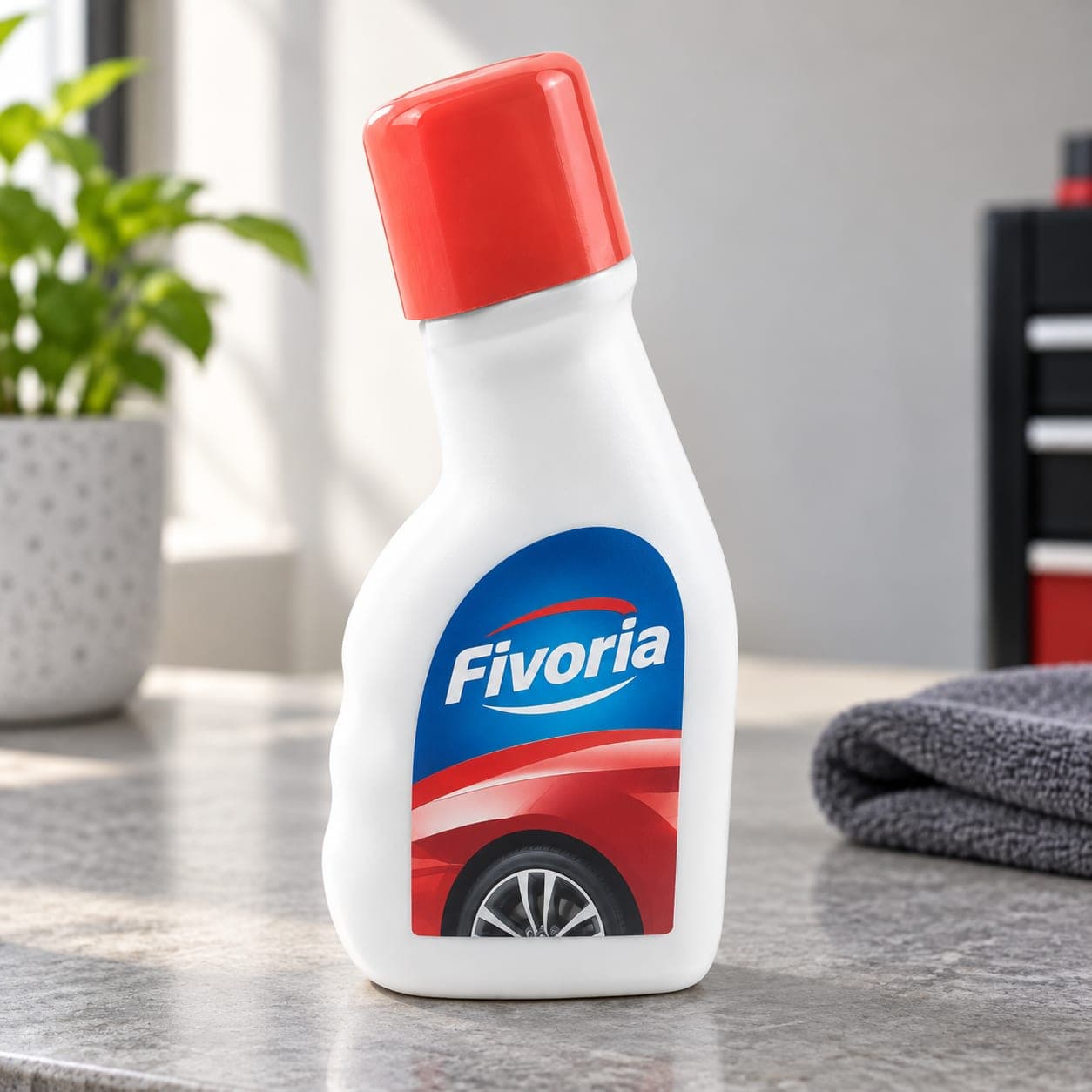
Fivoria
Car scratch remover polish for light scratches
Get it between Tuesday 10 November and Thursday 12 November
No card: you pay the courier in cash.
Sold by Extrapy · Pay on delivery · WhatsApp
By law: 14 days to return your order · 3-year legal guarantee
What it does
A scratch remover polish you apply by hand with a sponge or a microfibre cloth. It reduces light surface scratches, swirl marks from washing and scuffs that stay within the clear coat. It does not repair deep scratches that reach the primer or the metal.
Specifications
| Product type | Scratch remover polish for hand application |
|---|---|
| Texture | Creamy paste |
| Contents | 100 ml |
| Container material | Plastic tube with screw cap |
| Dimensions | Approx. 15 × 5 × 4 cm (container) |
| Weight | Approx. 130 g |
| Compatibility | Glossy clear-coated paint of any colour; not suitable for matt paint, vinyl wraps or unpainted plastics |
| Product colour | White |
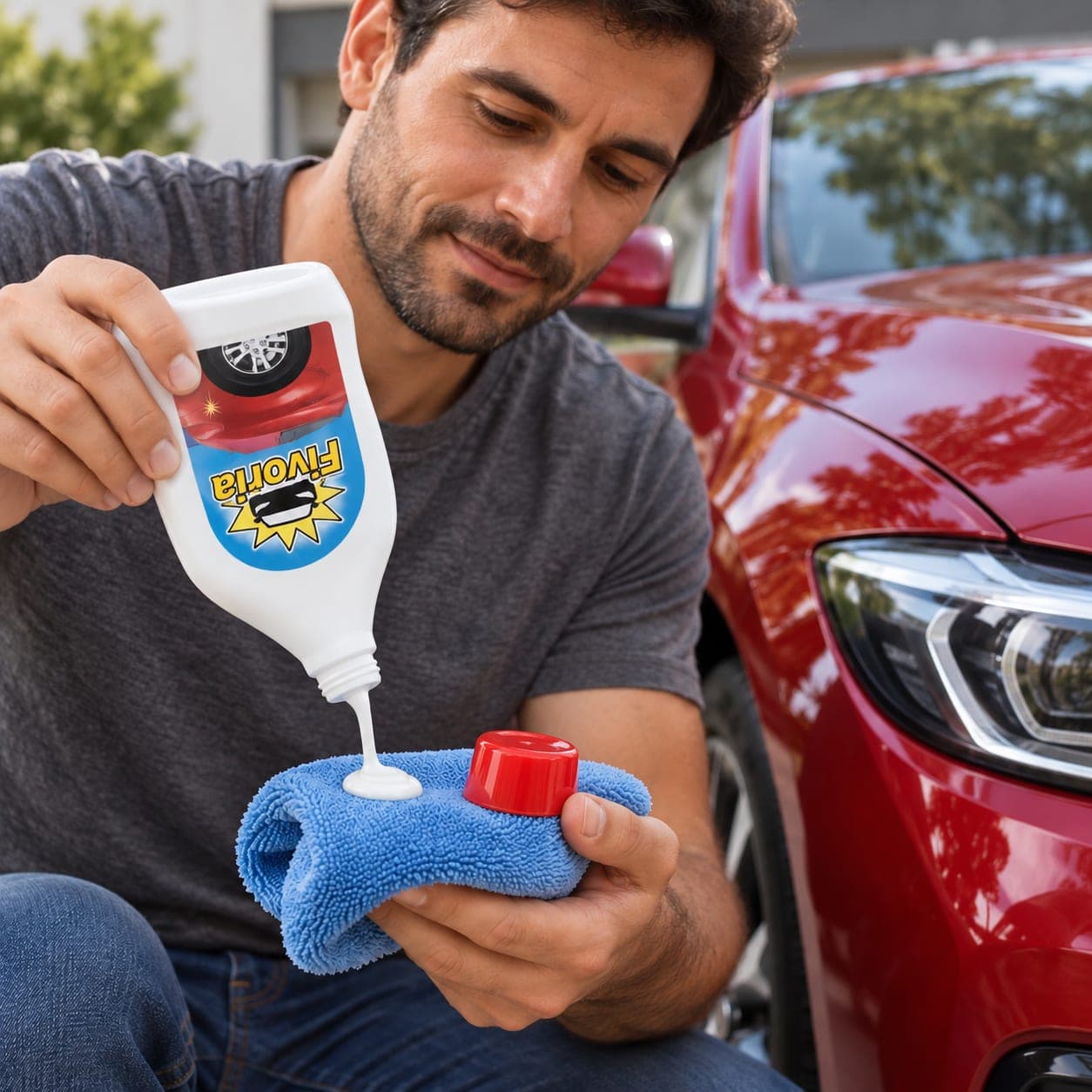
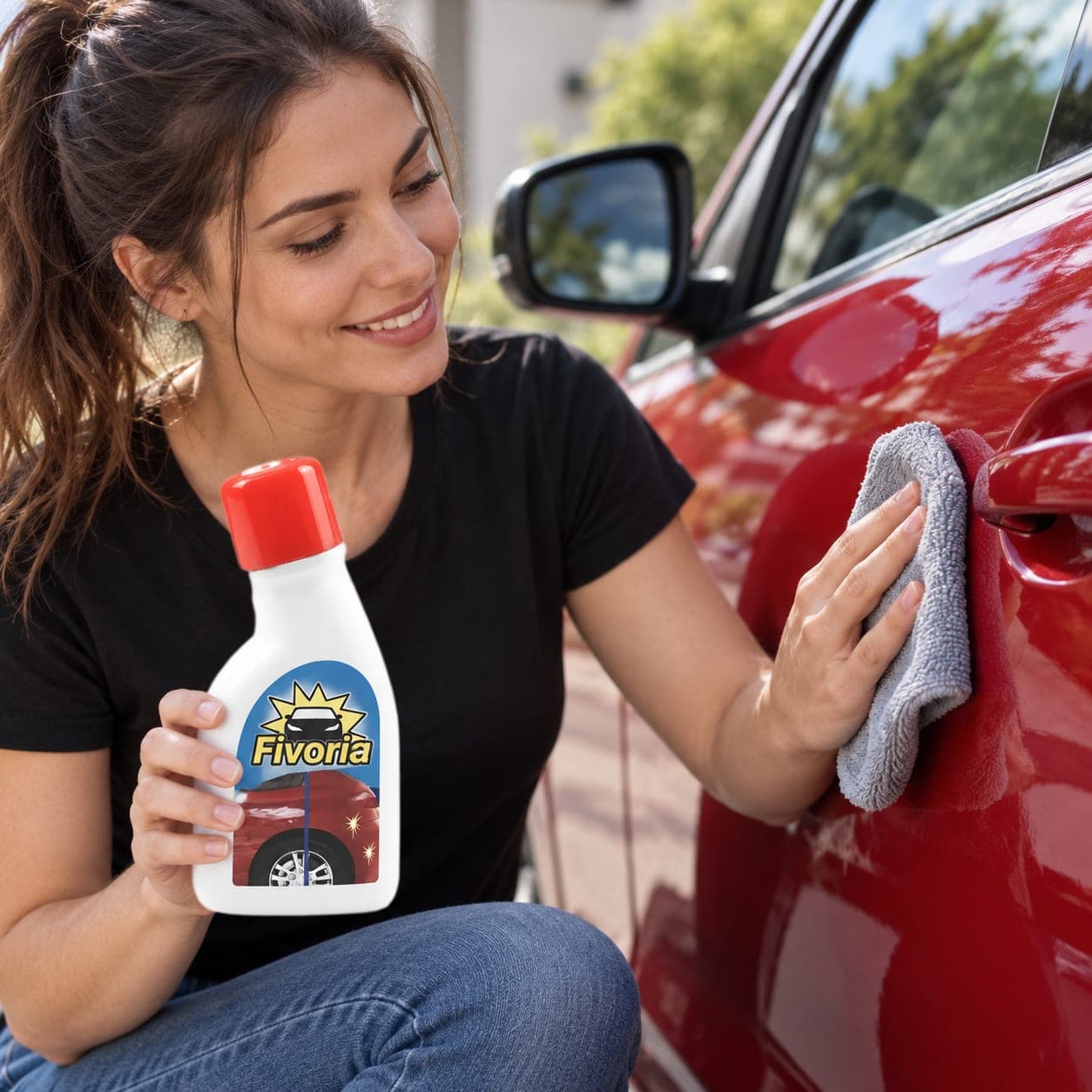
| Application | By hand, with a sponge or microfibre cloth |
| Guarantee | 3-year legal guarantee |
What's in the box
- Fivoria scratch remover polish
- Applicator sponge
- Microfibre cloth
- Instructions for use
Read the full description
Fivoria is a car scratch remover polish that you apply by hand, with a sponge or a microfibre cloth and no polishing machine. It is for marks that stay within the clear coat: fine scratches from branches or from fingernails around the door handles, swirl marks from washing, and scuffs that leave paint from another car or a pillar. It is for anyone who wants to improve the look of the bodywork at home, with a little patience, without a trip to the body shop over a small mark. It is not a paint or a filler, and it does not repair deep scratches.
Which car scratches it removes and which it does not
A car's paint is covered by a transparent layer of clear coat. A polish works within that layer: its very fine abrasive particles smooth the edges of the scratch until it stops catching the light and becomes far less noticeable or can no longer be seen.
To find out whether your scratch is of that kind, run a fingernail across it. If the nail slides over without catching, the scratch is superficial and worth a try. If it catches, or if you can see grey, white or metal at the bottom, the damage has gone through the clear coat and needs paint.
Car polish by hand, with no machine
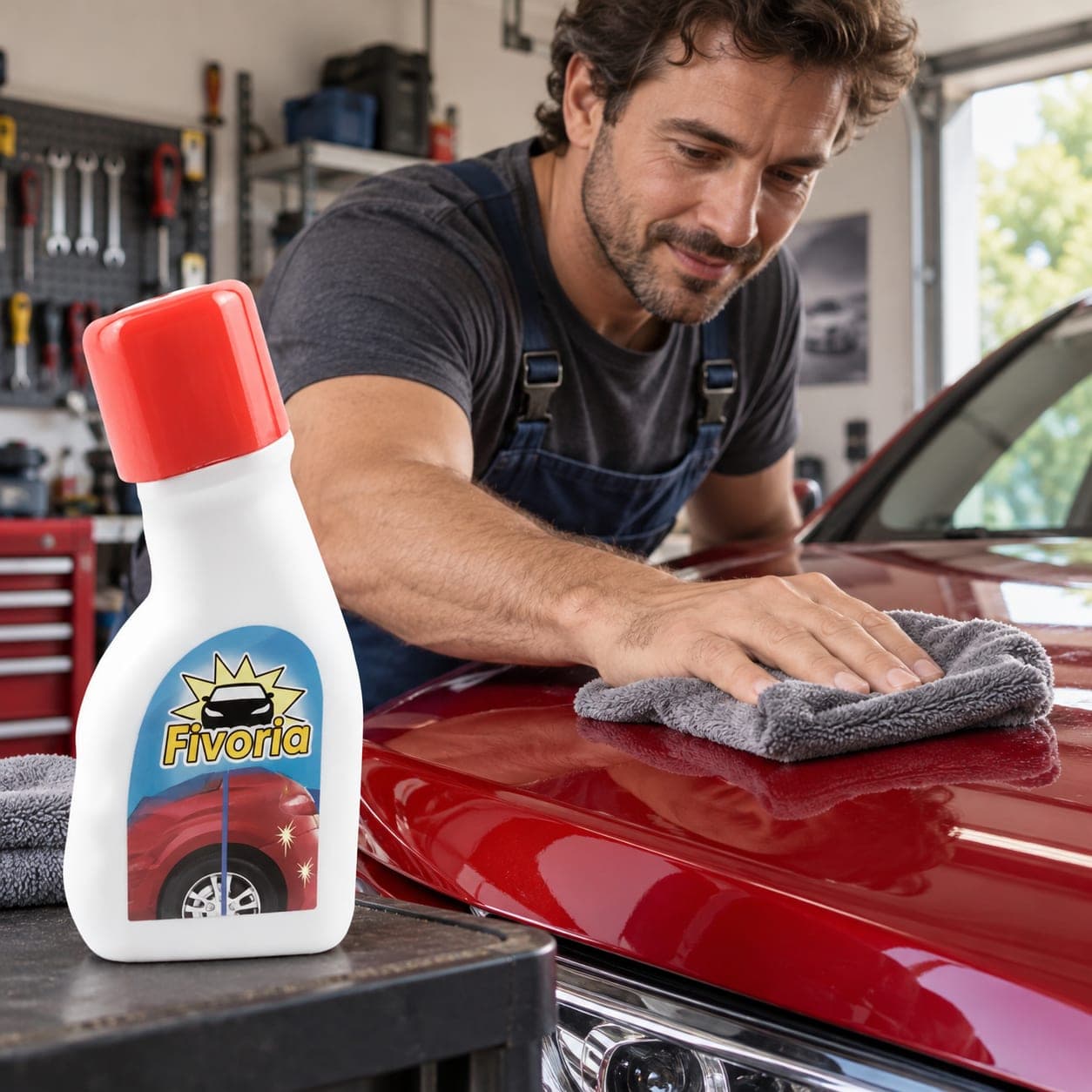
You need neither a machine nor experience. You work in small areas, with a small amount and circular movements, and check the result every few passes. By hand you progress more slowly than with a polisher, but it is also harder to overdo it and heat up the paint, which is the usual beginner's mistake.
Swirl marks, parking scuffs and dull paint
Besides individual scratches, it works well on the swirls left by car washes and dirty sponges, on the scratched area under the door handles and on parking scuffs that are really someone else's paint sitting on top of yours. As it smooths the clear coat, the treated area also regains some of its gloss.
How to remove scratches from a car step by step
Wash and dry the area
Dust and grit scratch when rubbed. Work in the shade, on a cool panel.
Test on a hidden spot
Apply a little to an area out of sight, such as the lower edge of a door, and check that the finish stays even.
Rub in circles
Put a small amount on the sponge or cloth and work an area about the size of your hand with moderate pressure.
Wipe off and check
Remove the residue with a clean microfibre cloth and look at the scratch with the light coming from the side. Repeat if it has improved but is still there.
Protect with wax
Polishing takes off any wax that was there. Apply a wax or sealant afterwards to protect the clear coat.
Storage and care after polishing
Close the container tightly and keep it in a cool place, away from sun and frost and out of the reach of children. Wash the sponge and the cloth with soap and water after use and let them dry; if they fall on the ground, do not use them without washing them, because a grain of sand scratches more than the mark you wanted to remove. On the bodywork, look after the area with gentle washes and a coat of wax from time to time.
Frequently asked questions
Does a car scratch remover really work?
It works on light surface scratches, the ones that stay within the clear coat. It smooths them until they stop catching the light and become far less noticeable or can no longer be seen. It does not fill or repaint: if the scratch has gone through the clear coat, the polish may soften its edges, but the mark will still be there.
How do I know whether my scratch is light or deep?
Do the fingernail test: run your nail slowly across the scratch. If it slides over, the mark is in the clear coat and the polish can deal with it. If it catches, or you see grey, white or metal at the bottom, it reaches the primer or the metal. Fivoria does not repair those scratches; they need paint.
Can it damage the car's paint?
Used properly, no: it takes off a very small amount of clear coat. The risk lies in rubbing with a dirty cloth, pressing too hard or going over the same point many times. That is why you should always try it on a hidden spot first, and stop if the scratch looks the same after two or three attempts: it will be too deep.
Does it work on any car colour, including black or metallic?
It works on the transparent clear coat, not on the colour, so in principle it suits glossy paint of any shade, metallic included. On black and very deep colours every mark shows more, including those left by polishing itself: use a very clean cloth, light pressure and try it on a hidden spot first.
Do I need to wax the car after polishing?
Yes, it is advisable. The polish takes off whatever wax or sealant the area had, leaving the clear coat clean but unprotected. Apply a wax or sealant once you have wiped off the residue. As well as protecting, wax helps to even out the gloss between the treated area and the rest of the panel.
Does it remove scratches from plastics, headlights or glass?
It is not meant for that. On unpainted plastics and rubber it leaves whitish residue that is hard to remove; cover them with masking tape if they are next to the scratch. Headlights and glass need specific products. Use it on bodywork painted with a glossy clear coat, and never on matt paint or vinyl wraps.