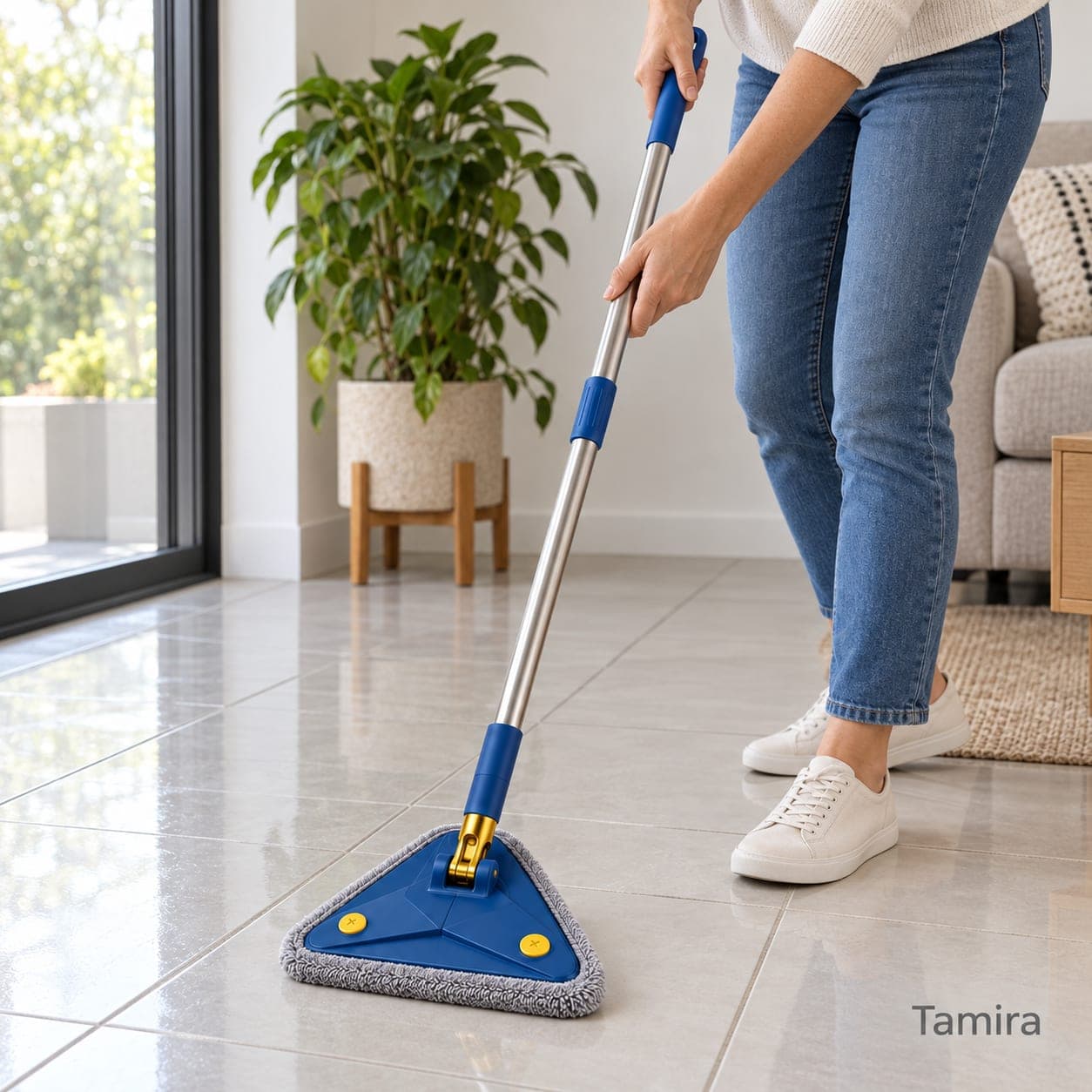
Illustrative image
Tamira
Self-wringing triangular mop with extendable handle
Get it between Tuesday 10 November and Thursday 12 November
No card: you pay the courier in cash.
Sold by Extrapy · Pay on delivery · WhatsApp
By law: 14 days to return your order · 3-year legal guarantee
What it does
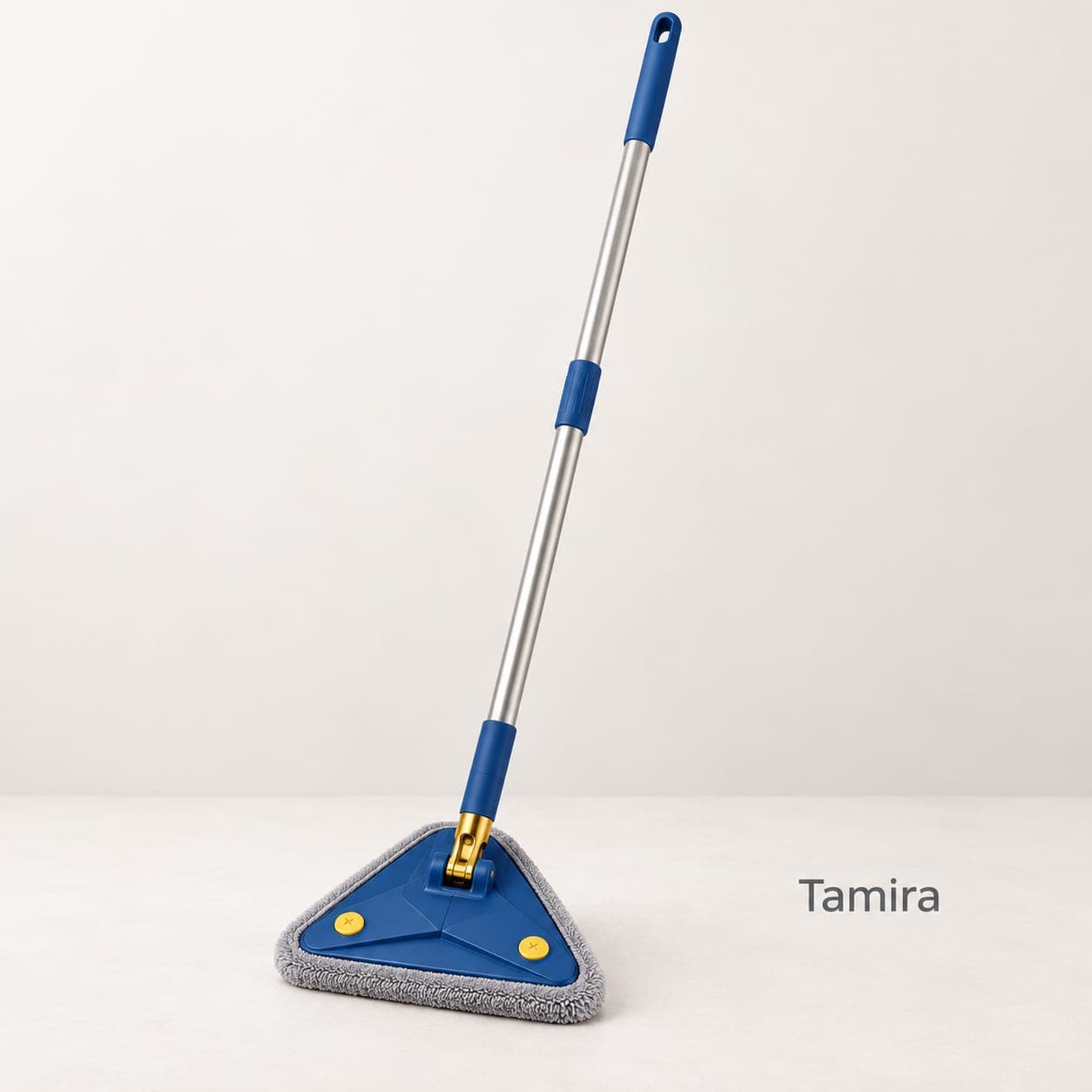
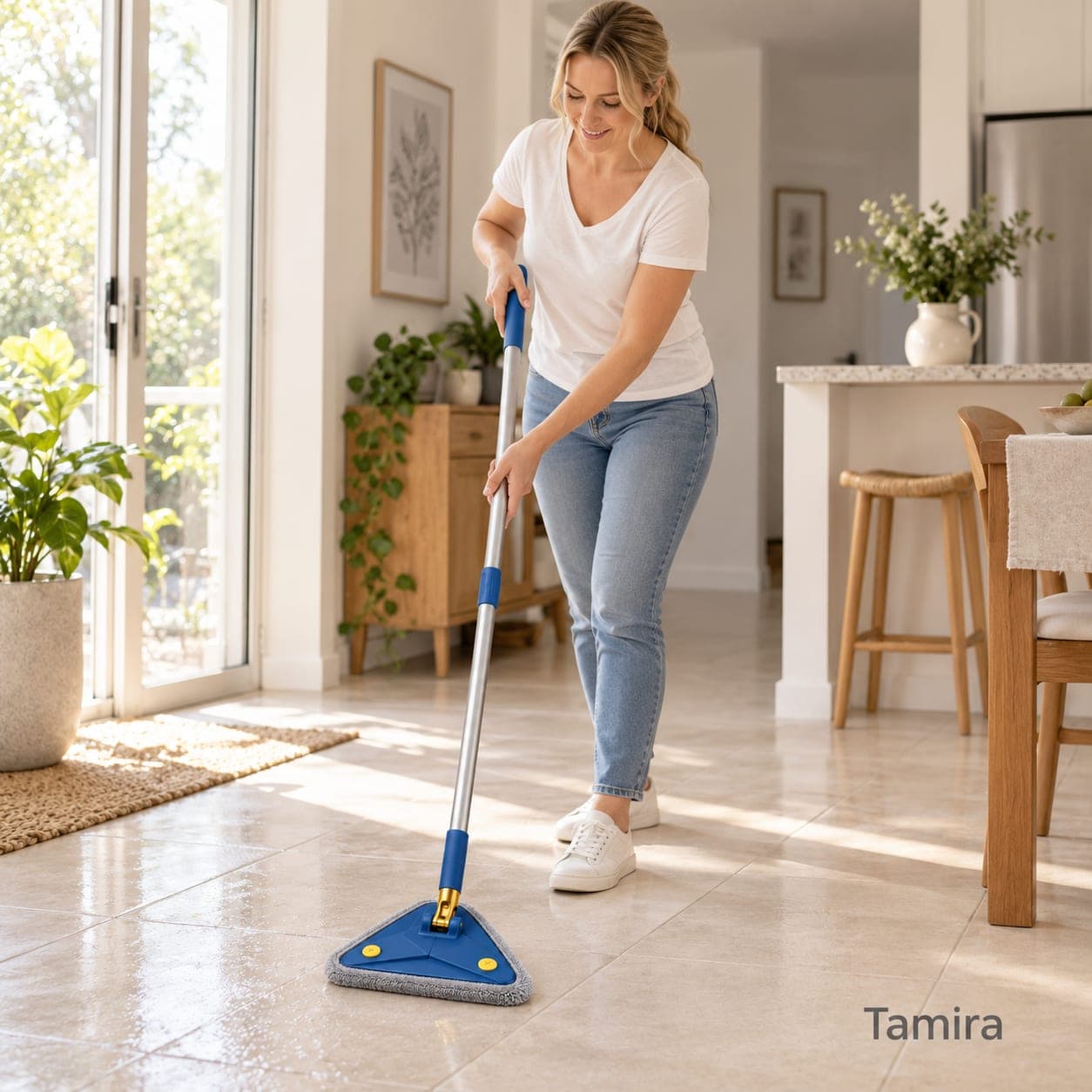
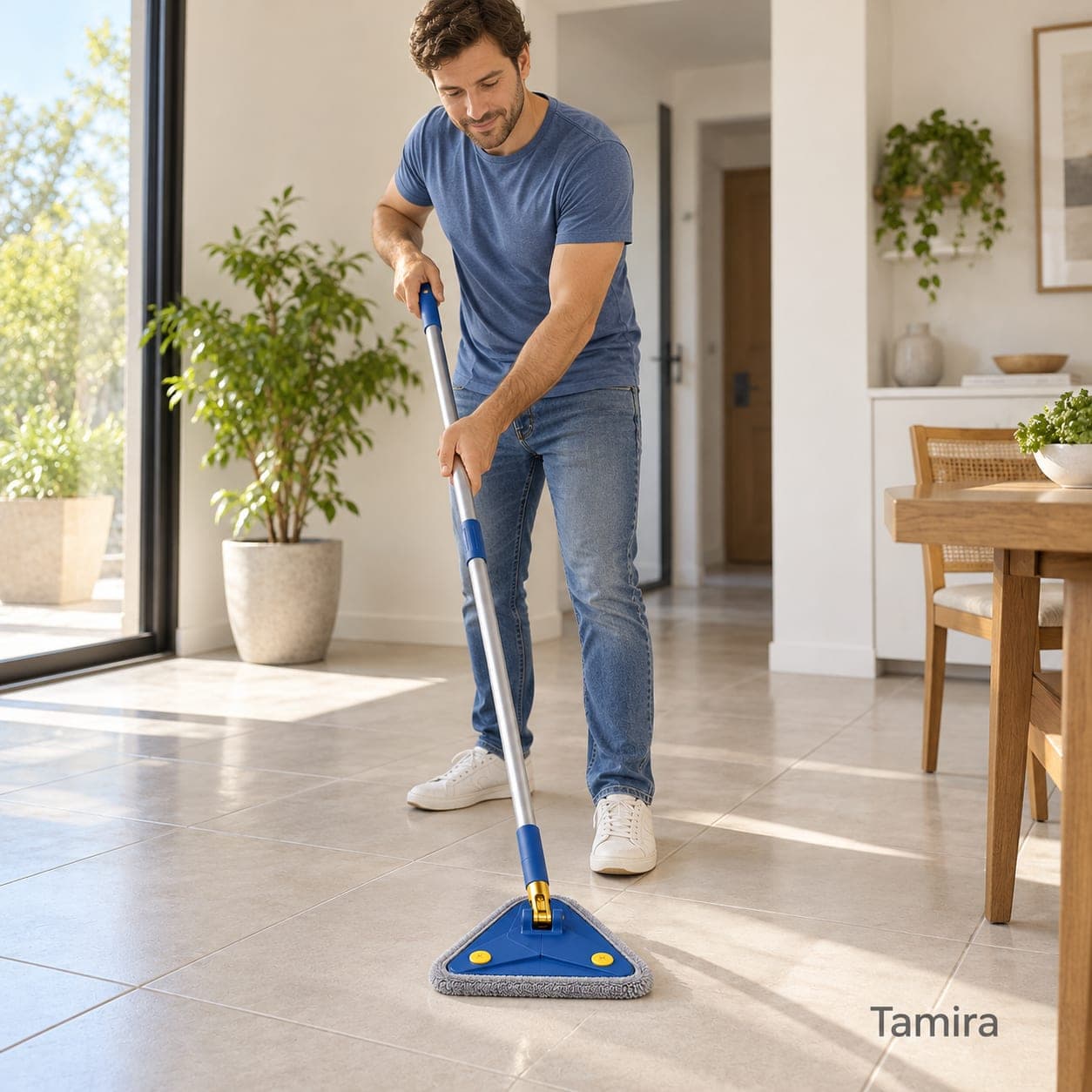
A mop with a triangular microfibre head that swivels to get into corners and an extendable handle to reach ceilings, high tiles and windows. To wring it, you slide the wringer along the handle and it squeezes the pad, in any bucket and without wet hands.
Specifications
| Product type | Swivel triangular-head mop with a wringer built into the handle |
|---|---|
| Materials | Aluminium handle, plastic head and wringer, microfibre pad |
| Handle length | 80 to 130 cm, telescopic |
| Head size | Triangular, about 30 cm per side |
| Pads included | 2 hook-and-loop microfibre pads |
| Weight | 0.8 kg |
| Compatibility | Smooth floors, tiles, washable walls, smooth ceilings, windows and shower screens |
| Colour | Grey and white |
| Guarantee | 3-year legal guarantee |
What's in the box
- 1 swivel triangular head
- 1 extendable handle with wringer
- Washable microfibre pads
- Assembly instructions
Read the full description
Tamira is a mop with a triangular microfibre head and an extendable handle, made for cleaning where an ordinary mop struggles: corners, skirting boards, tiled walls, ceilings, windows and the tops of wardrobes. The head swivels on the handle and the wringer is built in, so you do not need a special bucket. It is practical for anyone who would rather not climb a ladder.
Triangular mop: the tip gets into the corners
The triangle shape leaves a tip that fits into the angle between two walls or between the floor and the skirting board, exactly where a round or rectangular head leaves a strip uncleaned. The straight sides follow the edges of furniture and tiles.
The microfibre pad picks up dust, hair and fluff when dry and mops when damp. It attaches with hook-and-loop fastening and changes in a moment.
Self-wringing triangular mop: wring without touching the pad
The wringer is part of the handle. You hold the head upright, slide the wringing piece downwards and the mechanism squeezes the pad and draws the water out. You can do it in any bucket, basin or sink.
The more times you repeat the movement, the drier the pad. For the floor, damp is enough; for walls, ceilings and windows, wring it well so that it does not drip.
A mop for cleaning ceilings, with an extendable handle
The handle is telescopic: it lengthens to reach the ceiling or the top of the shower walls, and shortens for mopping or storage. The head swivels and tilts, so the pad stays flat against the surface even when the handle is at an angle. That way you clear cobwebs or dust up high from the floor.
A mop for cleaning windows, shower screens and tiles
On windows and shower screens, use the pad just damp, from top to bottom and in slightly overlapping strips. Finish with the head clean and dry, or with a cloth, to remove water marks.
How to use the triangular mop, step by step
Assemble and adjust the handle
Attach the handle to the head, press the pad onto the hook-and-loop strip, centred, and extend the handle to the length you need. Tighten the lock so it does not slide back.
Wet the pad
Dip the head into a bucket of water with a little of your usual cleaner.
Wring it
Hold it upright over the bucket and slide the wringer once or several times, depending on how damp you want it.
Clean from top to bottom
Start with the ceiling and walls and finish with the floor. Turn the head to get the tip into the corners.
Rinse and let it dry
When you finish, rinse the pad, wring it well and let it dry before putting the mop away.
Care and maintenance
Wash the pad by hand or in the washing machine with ordinary detergent, without fabric softener or bleach, and let it air dry. Rinse the wringer with water when you finish, so that hair and soap residue do not build up, and wipe it dry. Store the mop with the handle retracted and the pad dry, hanging up or standing in the cleaning cupboard.
Frequently asked questions
What is the advantage of a triangular mop over an ordinary one?
The tip of the triangle gets into corners and nooks that a round or rectangular head cannot reach, and the straight sides follow skirting boards well. The head also swivels and the handle extends, so the same mop works for the floor, the walls, the ceiling and the windows.
How do you wring the self-wringing triangular mop?
With the handle itself. Hold the head upright over a bucket or the sink and slide the wringing piece downwards: the mechanism squeezes the pad and draws the water out. Repeat the movement until it is as damp or as dry as you need, without touching the pad with your hands.
Can it be used as a mop for cleaning ceilings?
Yes. Extend the handle, wring the pad very well so that it does not drip and go over the ceiling in strips from the corner. It works well for dust, cobwebs and light splashes on smooth bathroom or kitchen ceilings. Keep it away from lights and sockets; on textured ceilings the pad may snag.
Can it be used as a mop for cleaning windows?
Yes, on windows, shower screens and large mirrors. Use the pad just damp with water and a little glass cleaner, go from top to bottom and finish with a clean, dry cloth to remove marks. For the outside of windows, clean them from a safe spot, without leaning out.
Can the microfibre pads go in the washing machine?
Yes. Peel the pad off the hook-and-loop strip, shake it and wash it with ordinary detergent, without fabric softener or bleach, which make microfibre less absorbent. Let it air dry before fitting it again. It is handy to keep one pad for the floor and another for windows and ceilings.
How far does the extendable swivel mop reach?
The handle is telescopic and adjusts between a short length, for mopping or storage, and a long one, for reaching ceilings and high areas. The minimum and maximum lengths are in the specifications on this page. Before buying, compare the maximum length with the height of your ceilings.