Illustrative image
Kidalen
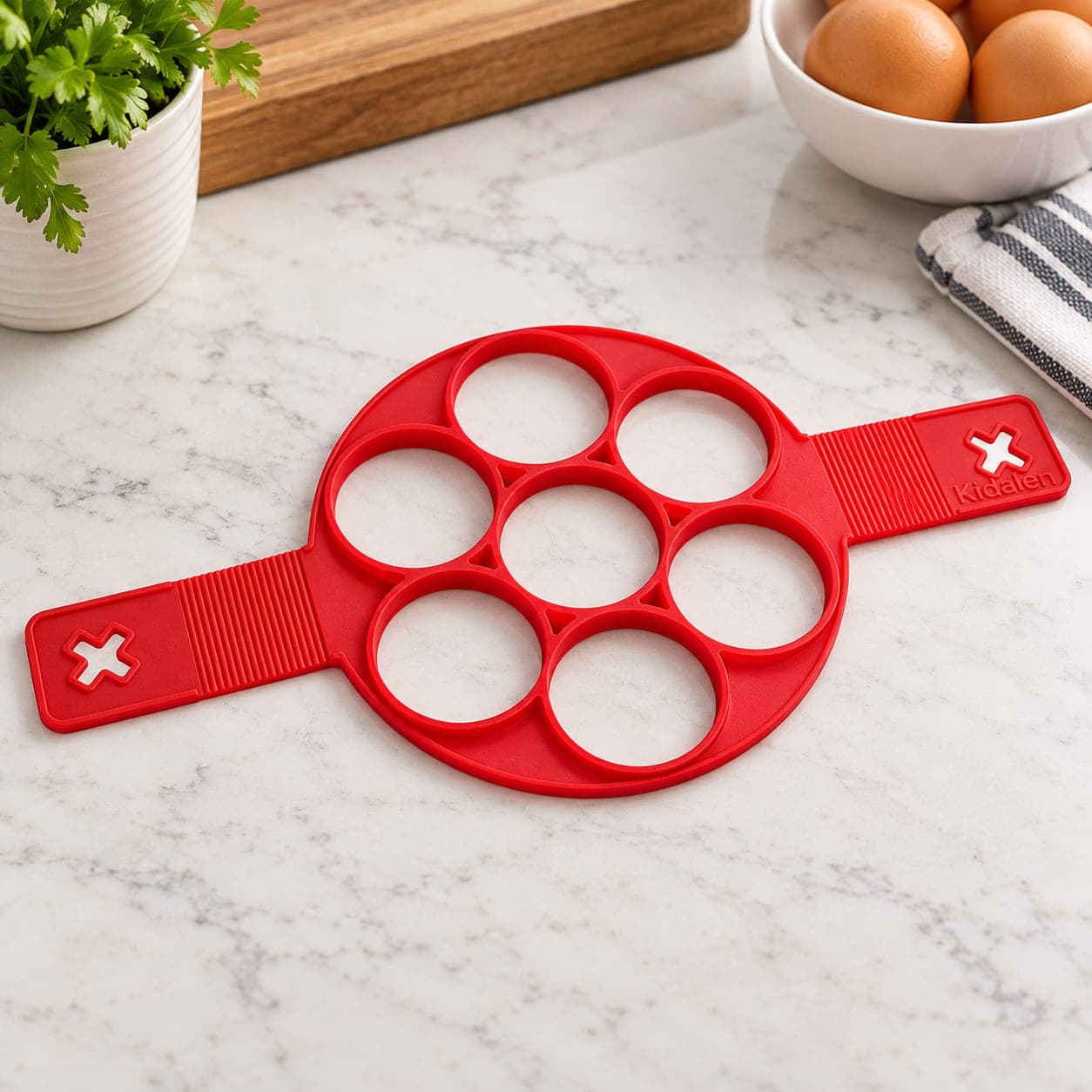
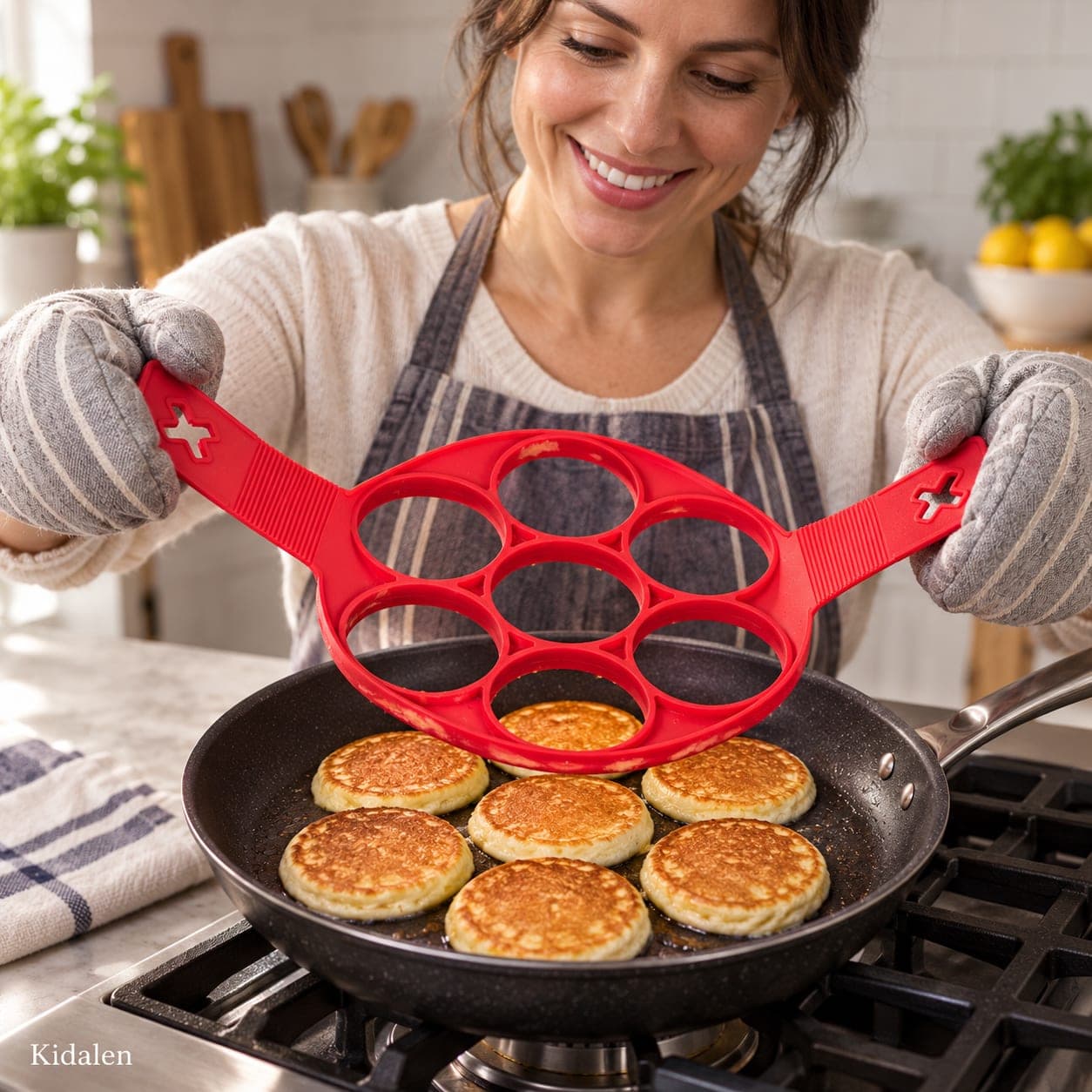
Silicone pancake mould for frying pans, with handles
Get it between Tuesday 10 November and Thursday 12 November
No card: you pay the courier in cash.
Sold by Extrapy · Pay on delivery · WhatsApp
By law: 14 days to return your order · 3-year legal guarantee
What it does
A round silicone mould with several cavities that sits inside the frying pan to make pancakes, eggs or small omelettes in the same shape. Its handles let you flip the whole batch in one go. It is flexible, does not scratch non-stick coatings and stores flat.
Specifications
| Product type | Silicone mould with handles for pancakes and eggs in a frying pan |
|---|---|
| Material | Food-grade silicone |
| Number of cavities | 7 |
| Dimensions | Approx. 22 cm in diameter (28 cm with handles) and 1.5 cm high |
| Compatible pan | Flat-bottomed frying pans from 26 to 28 cm |
| Weight | Approx. 130 g |
| Maximum temperature | Up to 230 °C |
| Dishwasher | Dishwasher-safe |
| Colour | Red |
| Guarantee | 3-year legal guarantee |
What's in the box
- 1 Kidalen silicone mould with handles
- Instructions for use and care
- Cardboard box for storage
Read the full description
Kidalen is a round silicone mould with several cavities that sits inside the frying pan. You pour batter into each cavity and get pancakes of the same size and thickness; with the handles, you flip the whole batch in one go. It works just as well for eggs or small omelettes, and it is made for family breakfasts, afternoon snacks with children or anyone who wants even pancakes without turning them one by one with a spatula.
A pancake mould for the frying pan: all the same size
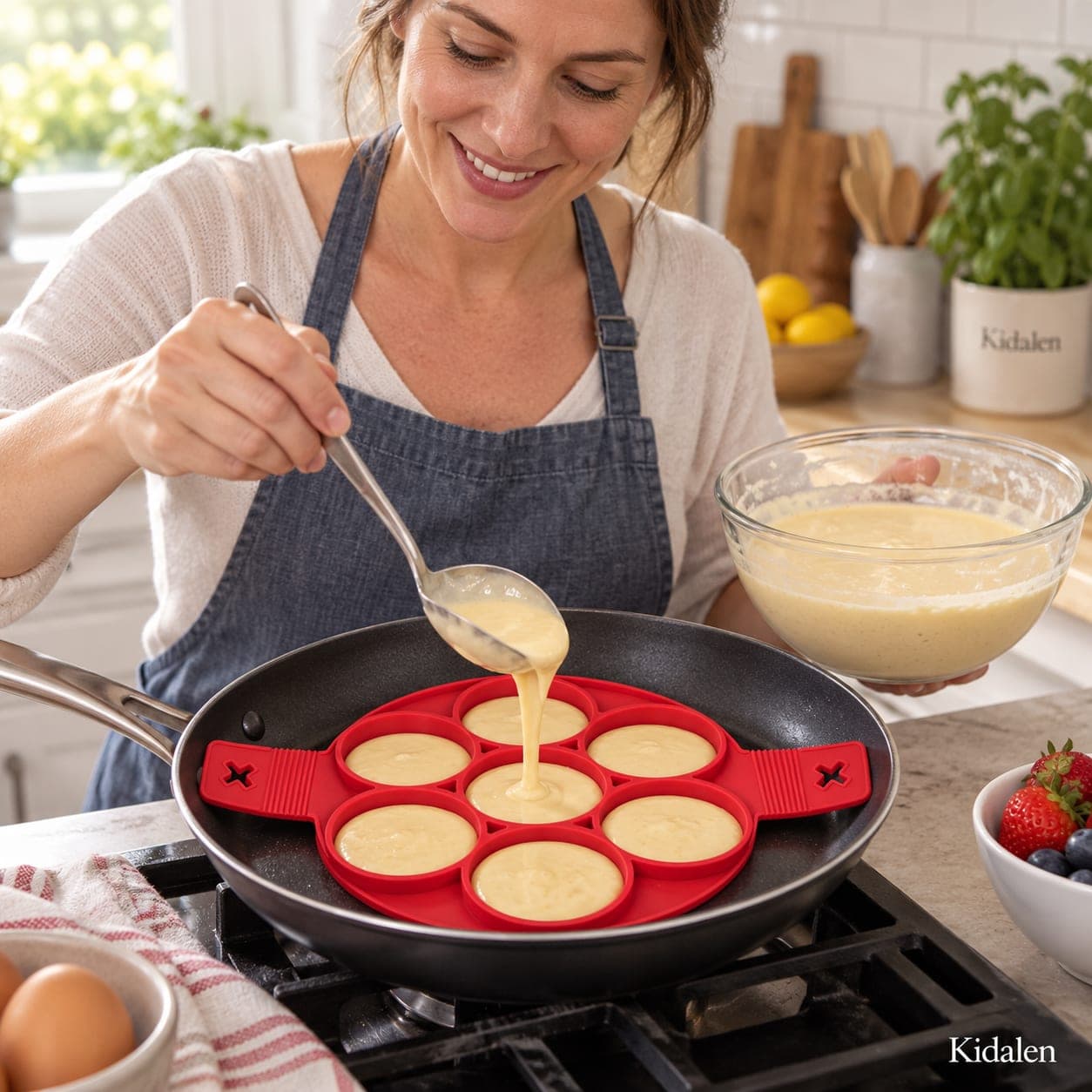
When you pour batter straight into the pan, every pancake comes out a different shape and some end up stuck together. The cavities hold the batter and give each one the same diameter, so they cook together and look alike on the plate. You also use the whole surface of the pan instead of making them one at a time.
A pancake mould with handles: one flip for the whole batch
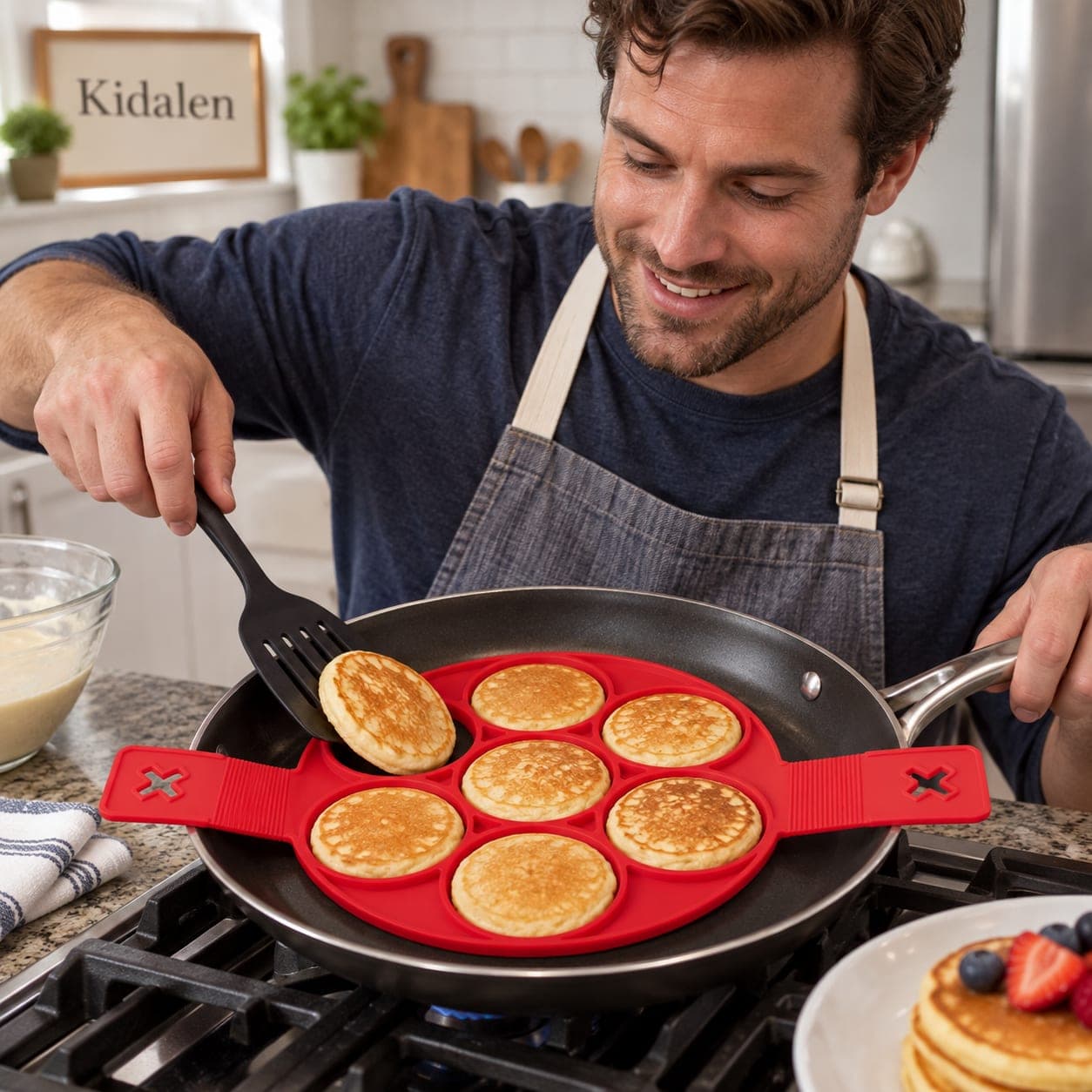
The tricky moment with a pancake is turning it over. Here there is no need to go piece by piece: once the underside has set, you hold the handles, lift the mould and turn it over the pan. They all change sides at the same time and finish cooking together, so they reach the table hot and all at once.
Also a mould for fried eggs and small omelettes
Crack an egg into each cavity and you get round eggs, just the right size for a roll or a burger. Beaten egg gives you individual omelettes. A little oil or butter in the pan helps everything come away cleanly.
Flexible silicone that is kind to non-stick coatings
Silicone is soft and does not scratch the coating of the pan, unlike metal rings. Because it is also flexible, the pieces come free with a light push and the mould stores flat in a drawer. The compatible pan size and the maximum working temperature are in the specifications table: check them before you start using it.
How to use the silicone mould in the pan
Heat and grease the pan
Put it over a medium heat with a few drops of oil or a little butter and lay the mould flat on the base.
Fill the cavities
Pour in the batter or crack an egg into each cavity, stopping short of the rim so nothing overflows as it rises.
Wait for it to set
Let the underside brown. With pancakes, you will notice bubbles appearing on the surface.
Flip with the handles
Hold the handles, lift the mould and turn it over the pan in one confident movement.
Release and serve
When the other side is done, take the mould away. If a piece stays in its cavity, push it out gently.
Cleaning and care
Let the mould cool and wash it with warm water, washing-up liquid and a soft sponge; leftover batter comes away more easily after a few minutes of soaking. Dry it well before putting it away. If you prefer the dishwasher, check in the specifications that the model allows it. Do not use knives or metal scourers on the silicone, and do not leave it in an empty pan with the heat on.
Frequently asked questions
What size of frying pan does the silicone pancake mould fit?
It has to lie flat on the base of the pan, without riding up the sides, so the batter does not escape. The diameter of the mould and the recommended pan size are in the specifications table. Measure the base of your pan, not the top rim, which is always wider.
Does the batter stick to the silicone mould?
Silicone releases food well, especially if you grease the pan lightly and wait until the underside has set before flipping. If you move the mould too soon, the batter that is still liquid clings to the edges. At the end, a light push from above is enough to free each piece.
Can it be used as a mould for fried eggs?
Yes. Crack an egg into each cavity once the pan is hot and greased, and the white will stay gathered in a circle. If you want them cooked on both sides, flip them with the handles; if you prefer a runny yolk, cover the pan for a moment and take the mould away without turning it.
Is it suitable for induction, ceramic and gas hobs?
The mould does not touch the hob, so it works on any heat source your frying pan works on. On gas, adjust the flame so it does not spread beyond the base and reach the handles. In every case cook over a medium heat and respect the maximum temperature given in the specifications table.
Can the pancake mould go in the dishwasher?
It depends on the model, so go by the specifications table, which shows the information confirmed by the manufacturer. By hand it cleans easily with warm water, washing-up liquid and a soft sponge. Avoid metal scourers and dry it well before putting it away so it does not pick up smells.
Which pancake batter works best with the mould?
Batters with some body, like the one for American-style pancakes, which fall from the spoon in a thick ribbon. A very runny batter, like crêpe batter, tends to seep under the cavities. If yours turns out thin, add a little more flour or let it rest for a few minutes before pouring.