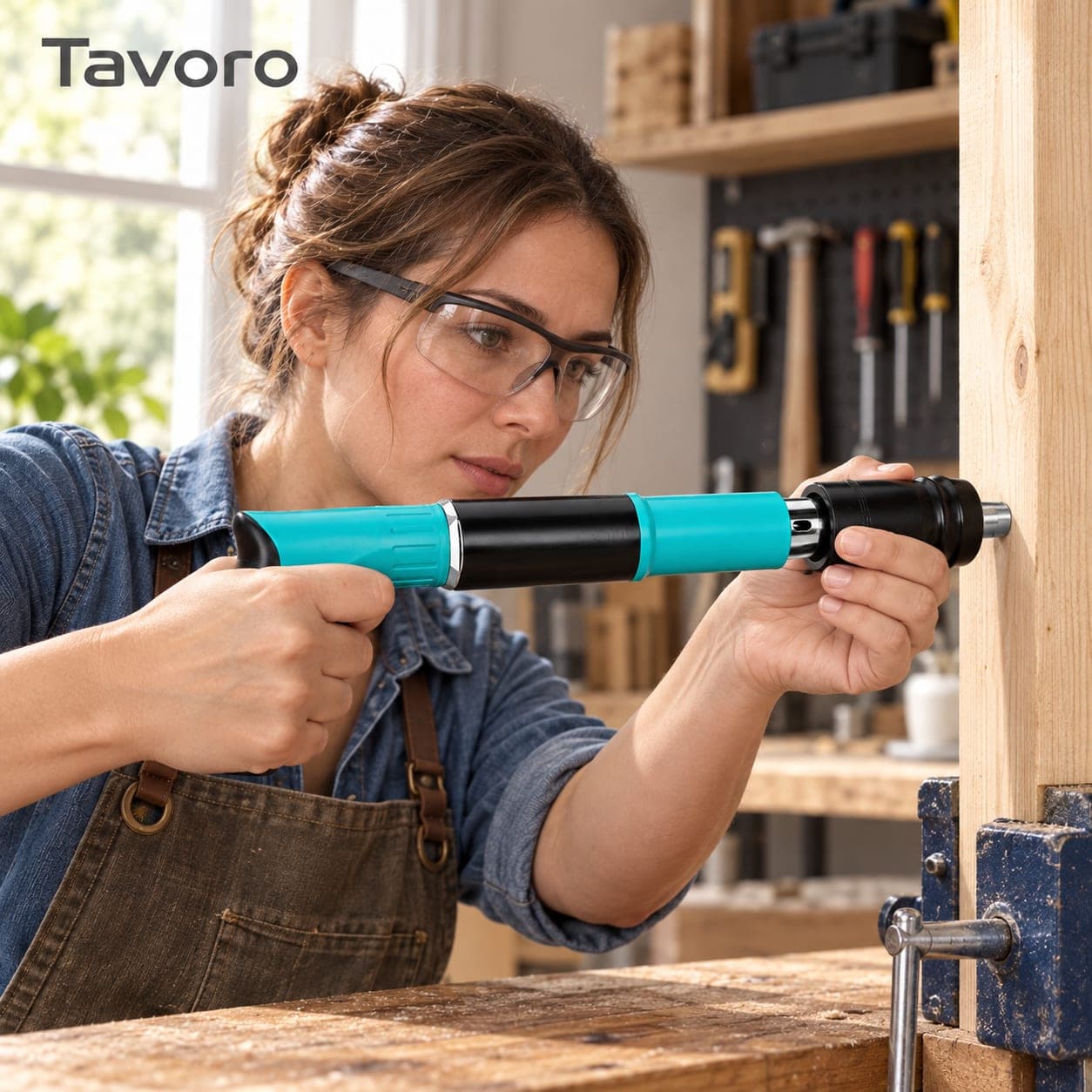
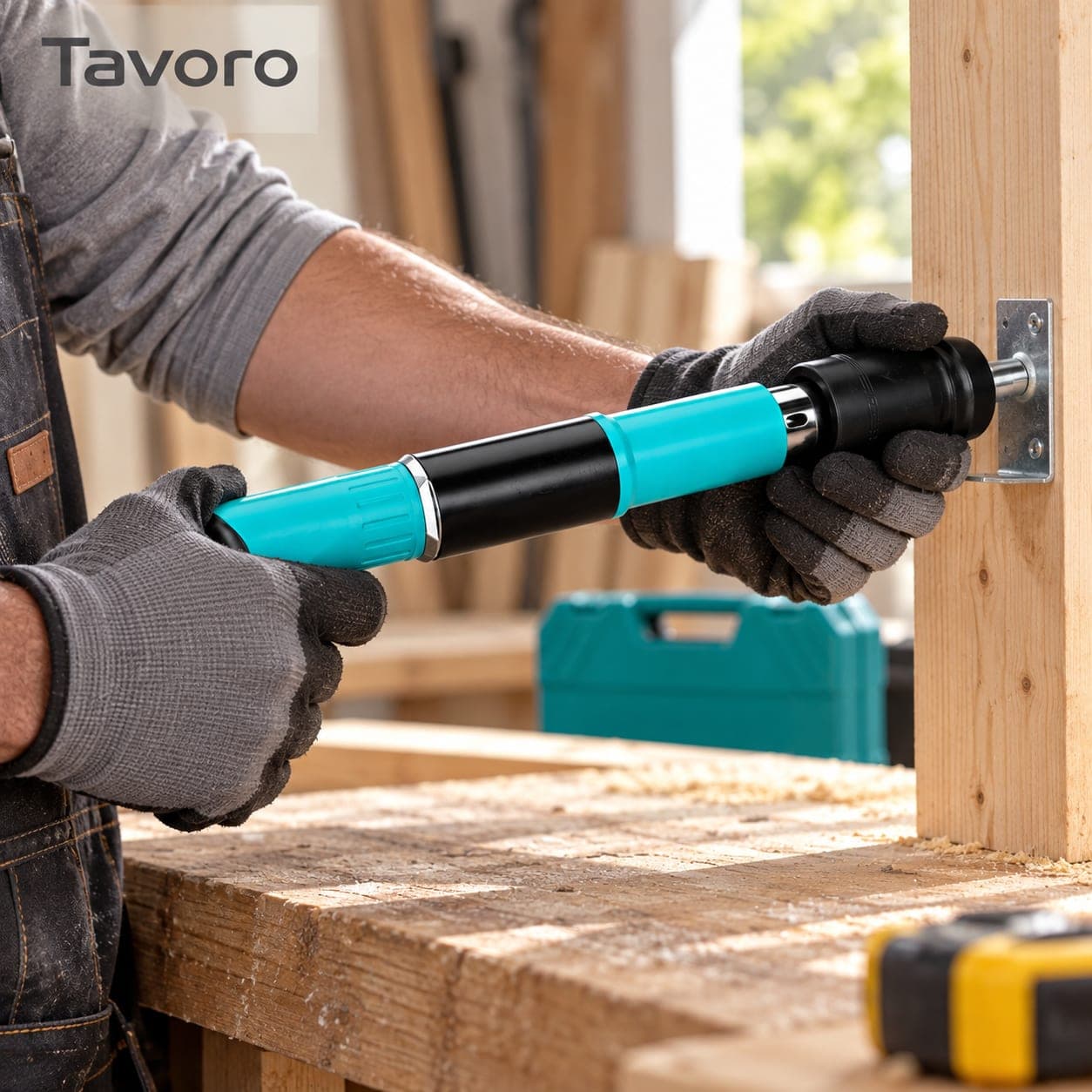
Illustrative image
Tavoro
Manual nail gun for concrete and brick, no compressor needed
Get it between Tuesday 10 November and Thursday 12 November
No card: you pay the courier in cash.
Sold by Extrapy · Pay on delivery · WhatsApp
By law: 14 days to return your order · 3-year legal guarantee
What it does
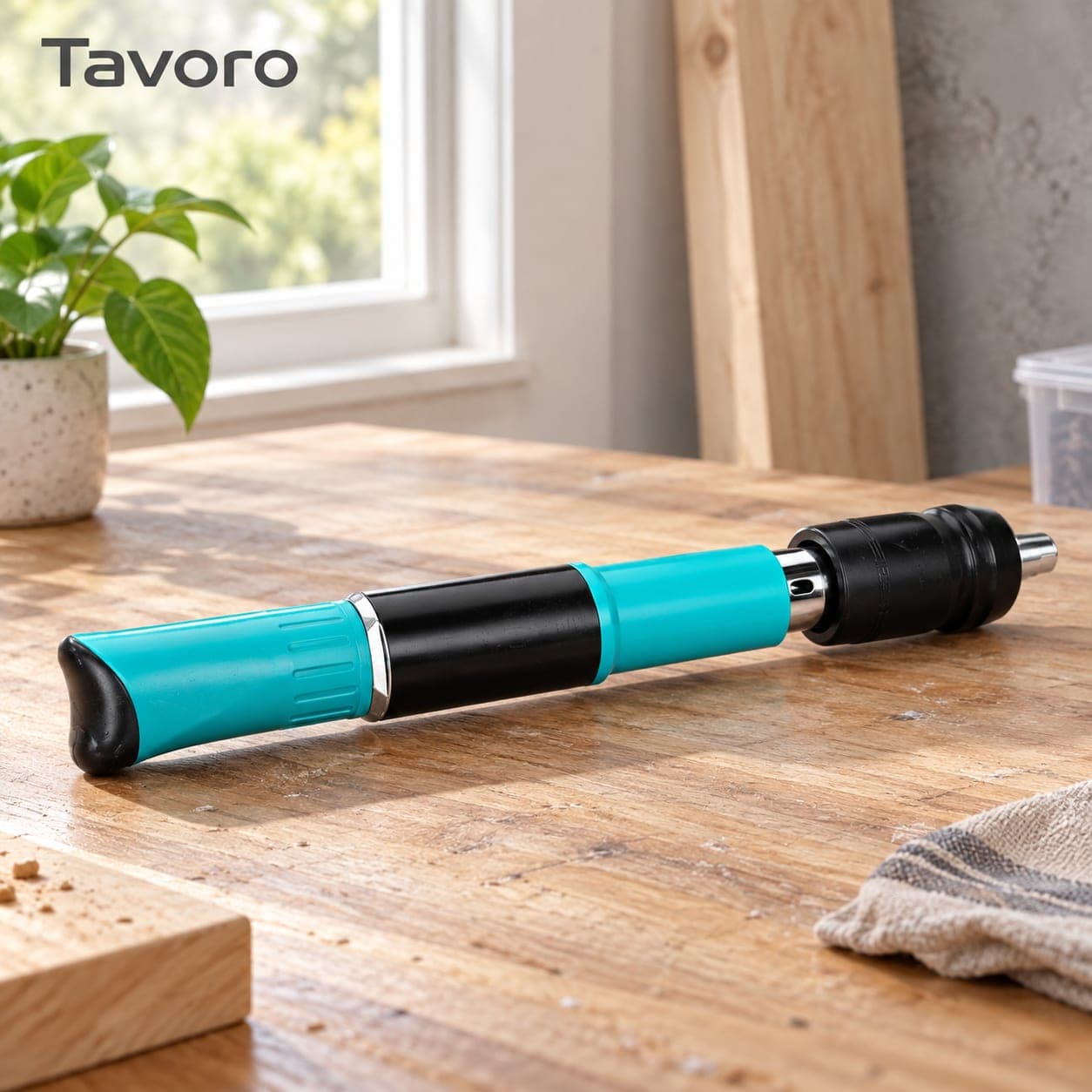
A manual nail gun for small fixings in walls and ceilings: a tube-shaped tool that sinks a steel nail when you push it with your palm. It has no cable, battery, gas or compressor. For cable clips, trunking, battens and light brackets in brick, concrete, block or wood.
Specifications
| Product type | Spring-driven manual nail gun, with no powder or propellant charges |
|---|---|
| Materials | Steel and aluminium alloy, with rubber grips |
| Compatible nails | Round-head steel nails, approx. 7 mm head diameter and 25 to 40 mm long |
| Force adjustment | By turning the rear cap |
| Base materials | Brick, concrete, block, thin steel profile and wood |
| Dimensions | Approx. 36 cm long and 4 cm in diameter |
| Weight | Approx. 1 kg |
| Nails included | 20 nails |
| Colour | Teal and black |
| Guarantee | 3-year legal guarantee |
What's in the box
- 1 Tavoro manual nail gun
- 1 carry case
- Safety glasses
- Spare springs, spanner and cleaning brush
- 1 box of 20 steel nails
- Instruction manual
Read the full description
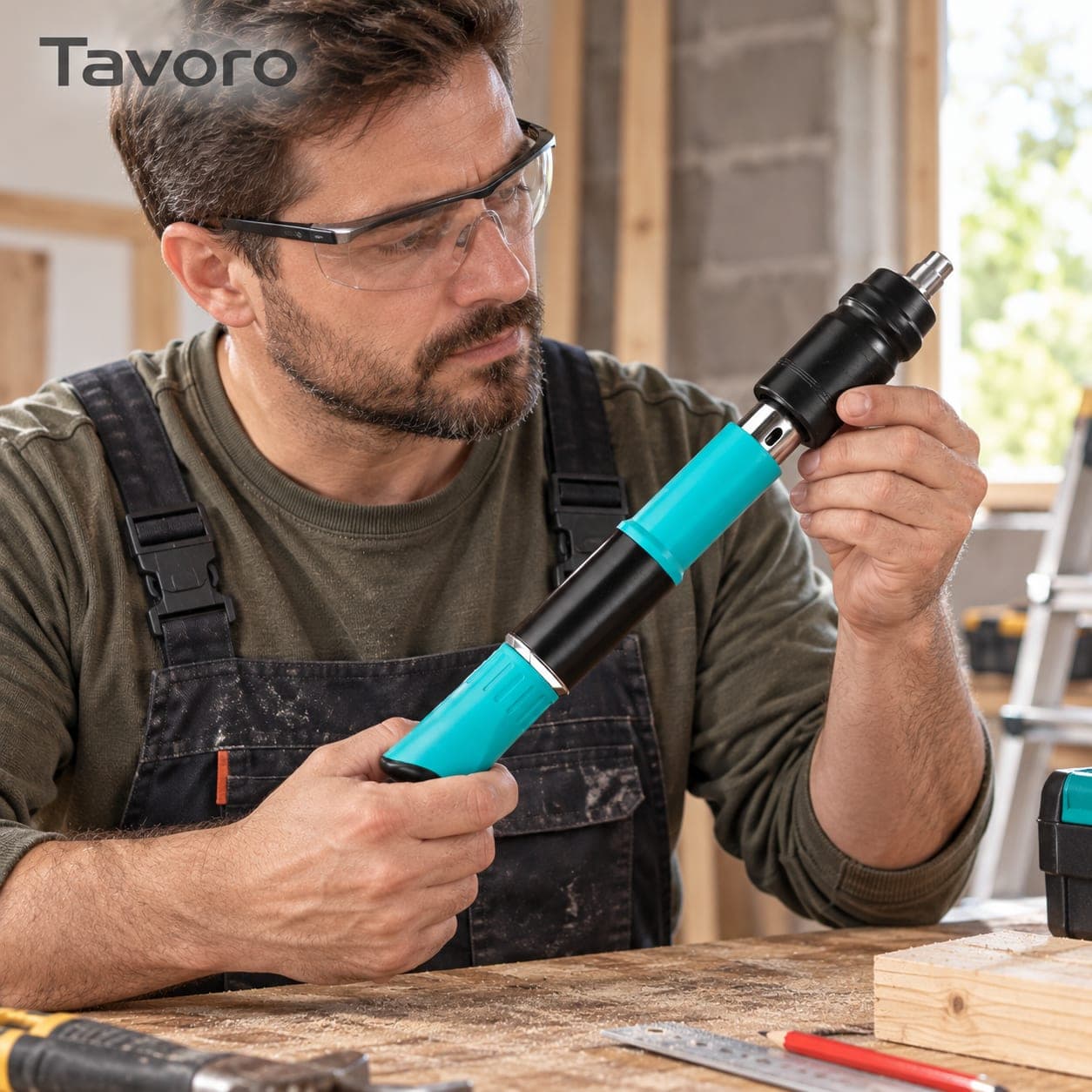
Tavoro is a manual nail gun for concrete, brick and block, made for small fixings in walls and ceilings; it also nails into thin steel profile and wood. It is tube-shaped, roughly the length of a forearm, in teal and black, with a rubber grip. It has no cable, battery, gas or compressor: the force comes from an internal spring that fires when you push the tool with your palm. It is for anyone who has to hold down a few cable clips, a length of trunking or some battens and would rather not get out the drill and wall plugs for every point.
A manual nail gun: how it drives a nail with no motor
It works simply. You put a special steel nail into the muzzle, rest the muzzle square on the surface and push firmly from the rear end. At the end of the stroke the spring mechanism releases and sinks the nail with one sharp blow. You load one nail at a time, so each fixing is a deliberate action and not a burst. The force of the blow is adjusted by turning the rear cap, to suit the material.
A manual nailer with no compressor, for light fixings
It suits small, repeated jobs: cable clips and clamps, trunking and conduit, wooden battens, light brackets and angle pieces, or hanger rods on a ceiling. Because it depends on neither a socket nor an air hose, you carry it in one hand to the top of a stepladder, into a storage room or into a garage with no power.
A nail gun for brick, concrete and block walls: what it will take
It nails into brick, concrete, block, thin steel profile and wood, but not every base responds the same way. Very hard concrete, natural stone and old, brittle brick may refuse the nail or chip around it. The sensible thing is to try it in a corner that will not be seen before you begin, and raise or lower the force according to the result.
It is a tool for light fixings. It is not meant for anything that carries real weight, such as a loaded shelf, a water heater or a handrail: that calls for a wall plug and screw or a proper anchor.
A case with glasses, spares and steel nails for concrete
The nail gun comes in a carry case with what you need to start and to maintain it: safety glasses, spare springs, a spanner for opening it, a cleaning brush and a box of nails. The nail type, its sizes and the quantity included are in the specifications table; always use nails of the type stated in the manual.
How to use it
Put the glasses on and check the wall
Use a detector or the building plans to make sure no pipes or cables run through that point.
Load a nail
Push the head of the nail into the muzzle until it is held, with the point facing out.
Rest the muzzle square
Position the item you are fixing and set the muzzle straight on it, without tilting the tool.
Push with your palm
Hold the grip with one hand and push in one firm movement from the rear end with the palm of the other.
Check and adjust
If the nail stands proud or sinks too far, turn the rear cap to change the force and repeat at another point.
Care and maintenance
After use, clear the dust from the muzzle and the inside with the brush from the case and wipe the outside with a dry cloth. If over time you notice the blow losing force, the spring can be replaced with one of the spares using the spanner, following the manual. Always store it unloaded, with no nail in the muzzle, inside its case and somewhere dry.
Frequently asked questions
How does a manual nail gun work?
Inside the tube there is a spring mechanism. You place a steel nail in the muzzle, rest it square on the chosen point and push the tool with your palm from behind. At the end of the stroke the spring releases and sinks the nail in one blow. It has no motor, battery, gas or compressor, and you load one nail at a time.
Does the manual nail gun for concrete work on any wall?
Not on all of them. It does well in ordinary brick, concrete and block, in thin steel profile and in wood. In very hard concrete, natural stone or old, brittle brick the nail may not go in, may bend, or the material may chip around it. Always try it on a spot that will not be seen and adjust the force before carrying on.
Which steel nails for concrete does it use?
It uses steel nails made for this kind of tool, not ordinary carpentry nails. A batch comes in the box to get you started; the type, diameter and lengths it accepts are in the specifications table and in the manual. When you buy more, check that they match those sizes: a different nail may jam or go in crooked.
Can I hang a shelf or a cabinet with these nails?
It is not advisable. This tool is meant for light fixings, such as cable clips, trunking, battens or small brackets. Anything that carries weight, could fall on someone or gets pulled, such as a shelf, a wall cabinet, a water heater or a handrail, needs a wall plug and screw or an anchor rated for that use.
Do you need a lot of strength to use a manual nailer with no compressor?
You need a firm, decisive push, more technique than strength: the muzzle properly square, a stable stance and a single movement with the palm. You will feel recoil against your hand with each nail, so it is worth holding the grip well and taking a break if there are many fixings in a row. Keep the glasses on throughout.
Can it fix battens without drilling?
Yes, it is one of its typical uses: holding thin wooden battens to a brick or concrete wall for light cladding or a skirting board. The nail passes through the wood and enters the base in one blow. With thick battens or ones that will carry weight, use wall plugs and screws. Check beforehand that there are no pipes or cables.