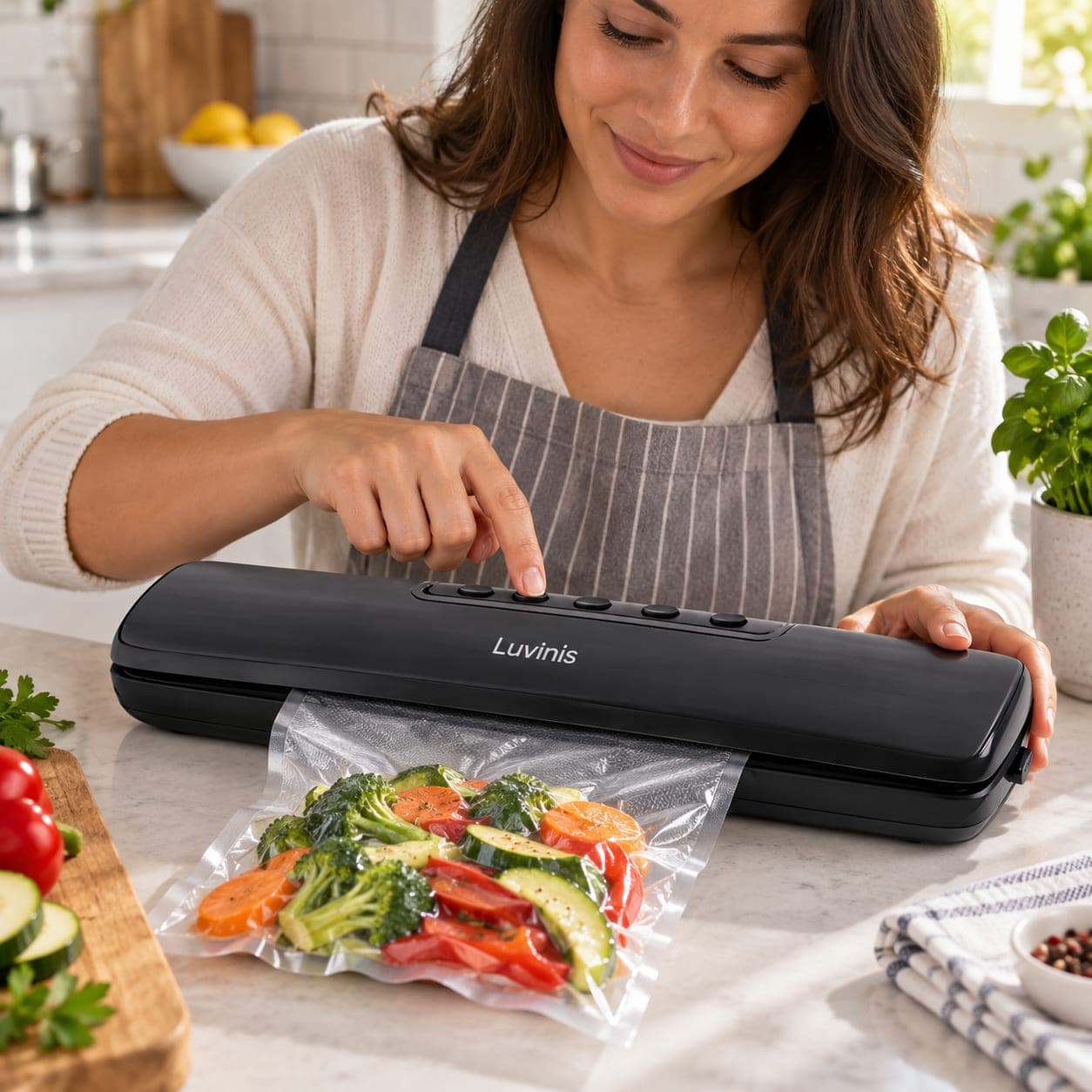
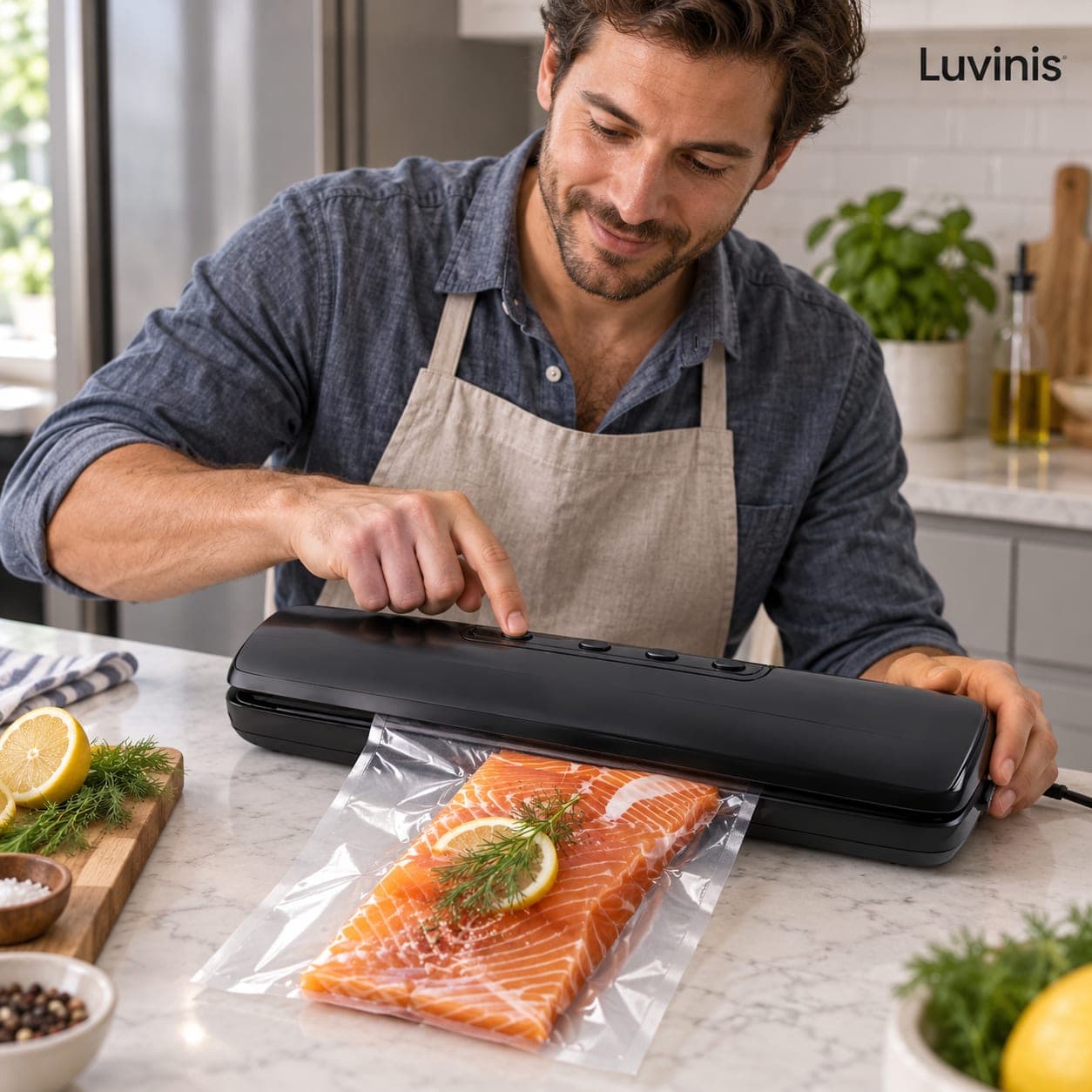
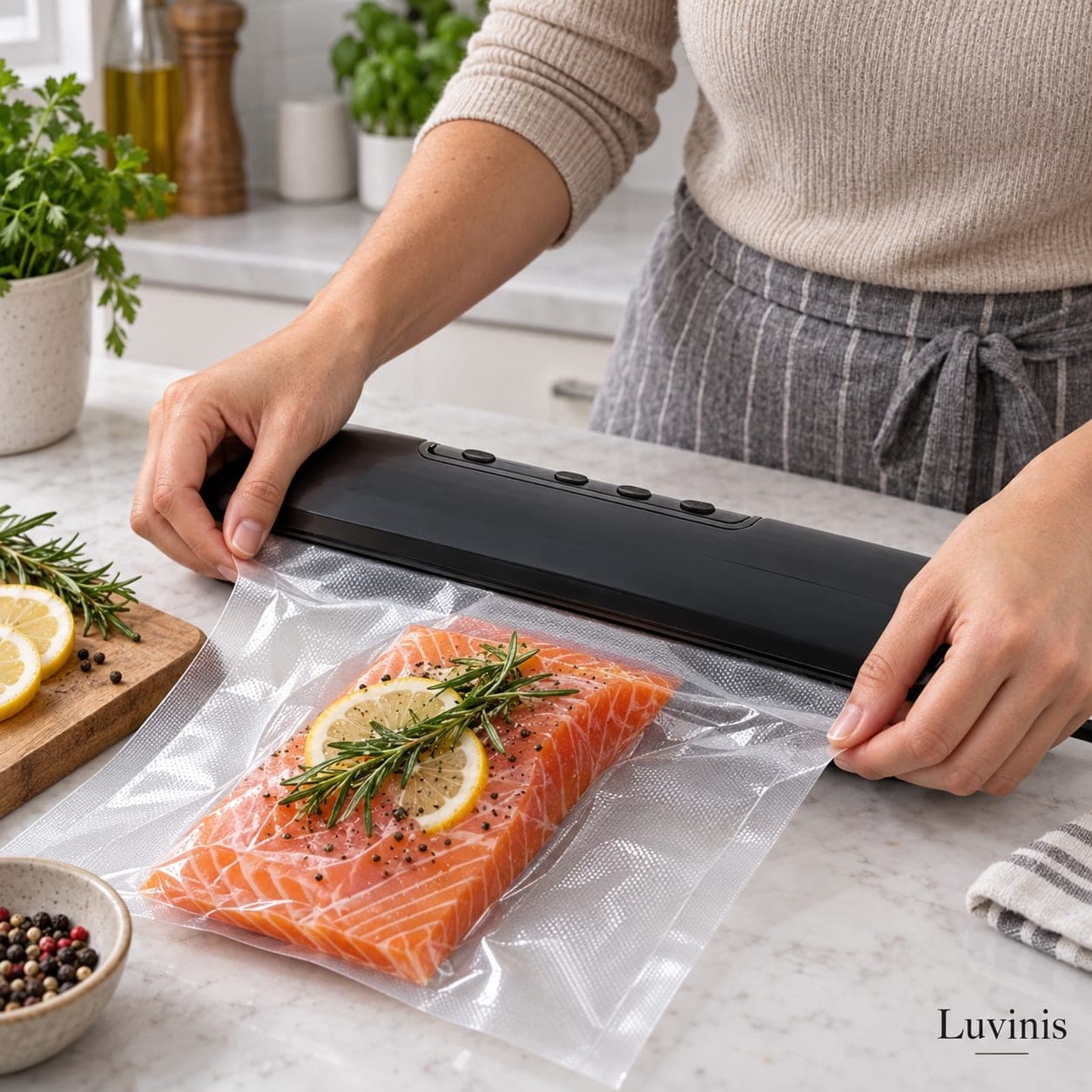
Illustrative image
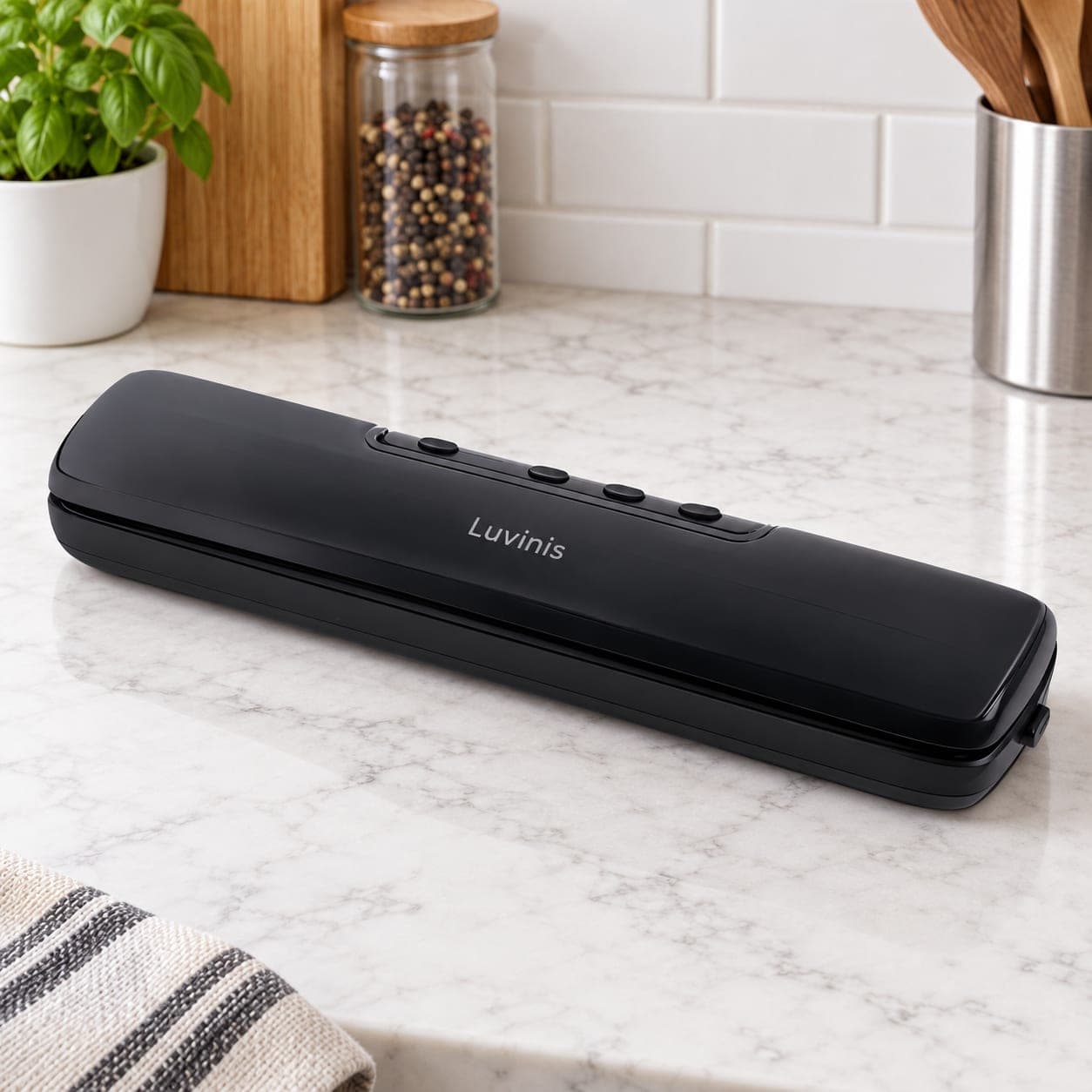
Luvinis
Vacuum sealer for food, for home use
Get it between Tuesday 10 November and Thursday 12 November
No card: you pay the courier in cash.
Sold by Extrapy · Pay on delivery · WhatsApp
Free shipping
By law: 14 days to return your order · 3-year legal guarantee
What it does
A compact vacuum sealer for the home kitchen. It draws the air out of embossed bags and closes them with a heat seal, so you can store food in the fridge or freezer in flat, tidy packs. It can also seal bags without drawing a vacuum.
Specifications
| Product type | Countertop vacuum sealer with heat sealing |
|---|---|
| Functions | Automatic vacuum and seal; seal only |
| Power | Approx. 110 W |
| Power supply | 220-240 V, 50 Hz, European plug |
| Maximum bag width | Up to 30 cm |
| Compatible bags | Embossed vacuum sealer bags and rolls |
| Material | ABS plastic housing; PA/PE sample bags suitable for food |
| Dimensions | Approx. 37 × 10 × 6 cm |
| Weight | Approx. 0.9 kg |
| Guarantee | 3-year legal guarantee |
What's in the box
- 1 Luvinis vacuum sealer
- Embossed sample bags
- Power cable
- Instructions for use
Read the full description
Luvinis is a vacuum sealer designed for the home kitchen. You put the food in an embossed bag, place the open end in the machine and, with one button, it draws the air out and heat-seals the bag. It is for anyone who shops for the week, cooks extra to freeze portions, buys meat or fish in large trays, or simply wants a tidy freezer.
Vacuum sealing for the freezer in flat packs
A bag with air in it takes up more room than you think and lets frost form on the food. With the air drawn out, the bag hugs the food and you get a thin, flat pack that stacks in the freezer or stands on its edge like a file. That way you can see what you have at a glance and defrost just the portion you need.
A home vacuum sealer that is easy to use
There is nothing complicated to learn. You close the lid over the end of the bag, press and the machine draws out the air until the bag fits snugly around the food; then it seals on its own and stops. With the seal-only function you can close an opened bag of crisps or coffee, or make bags to size from an embossed roll.
Vacuum sealer bags: embossed and made to size
The sealer works with embossed bags, the kind with a textured side that lets the air out. Smooth bags will not work. You can use ready-made bags or a roll that you cut to the length you need and seal at one end before filling. Beyond the kitchen, it is also handy for protecting documents, batteries or travel clothes from air and damp.
How to vacuum seal at home
Fill the bag
Put in the chilled or frozen food, leaving a few fingers' width clear to the edge, and wipe the mouth of the bag.
Place the open end
Rest the open end inside the vacuum chamber, with the bag flat and free of creases.
Close the lid and press
Press the lid down until it locks and press the vacuum and seal button.
Wait until it finishes
When the light goes off, open the lid, take out the bag and check that the seal is continuous.
Label and store
Note the contents and the date, and put the pack in the fridge or freezer.
Cleaning and maintenance
Unplug it before cleaning. Wipe the outside with a damp cloth and the vacuum chamber and rubber gasket with a dry one; if any juice has got in, dry it straight away. Do not put it in water. Let the sealing bar cool between bags when you seal several in a row, and store it with the lid unlocked so the gasket does not get squashed.
Frequently asked questions
Which vacuum sealer bags do I need?
Embossed bags or rolls, the kind with a textured side that lets the air flow out. Smooth freezer bags will not work, because the machine cannot draw the air out of them. You can use bags from other brands as long as they are embossed and no wider than the maximum given in the specifications.
Can liquids or soups be vacuum sealed?
Not directly: the machine would draw the liquid into the vacuum chamber. The practical way is to freeze the soup, stock or sauce in a container first, turn out the block and seal it once solid. With juicy foods such as marinated meat, leave more space to the edge and chill them well beforehand.
How do you vacuum seal soft foods at home?
Soft or delicate foods such as bread, berries or sponge cake get squashed by the vacuum. Freeze them spread out on a tray beforehand and seal them once they are firm. If you want to close a bag without squashing what is inside, use the seal-only function.
Does vacuum sealing for the freezer help keep it tidy?
Yes. Without air, each portion becomes a flat pack that takes little room, stacks well and can be stored on its edge. If you write the contents and the date on the bag, you find what you are looking for without emptying the drawer. And with less air inside the bag, less frost forms on the food.
Why is the bag not sealing properly?
It is usually because the mouth of the bag was damp, dirty or creased, or because a smooth bag was used. Clean and dry the edge, lay it straight over the sealing bar and let the machine cool a little if you have sealed several bags in a row. Also check that the gasket is clean.
Can the bags be reused?
Those that held dry foods such as coffee, nuts or pasta can be washed, dried thoroughly and sealed again, although they get a little shorter each time. It is best not to reuse bags that held raw meat or fish for food. For other uses, such as storing documents, they are fine.