Illustrative image
Vevora
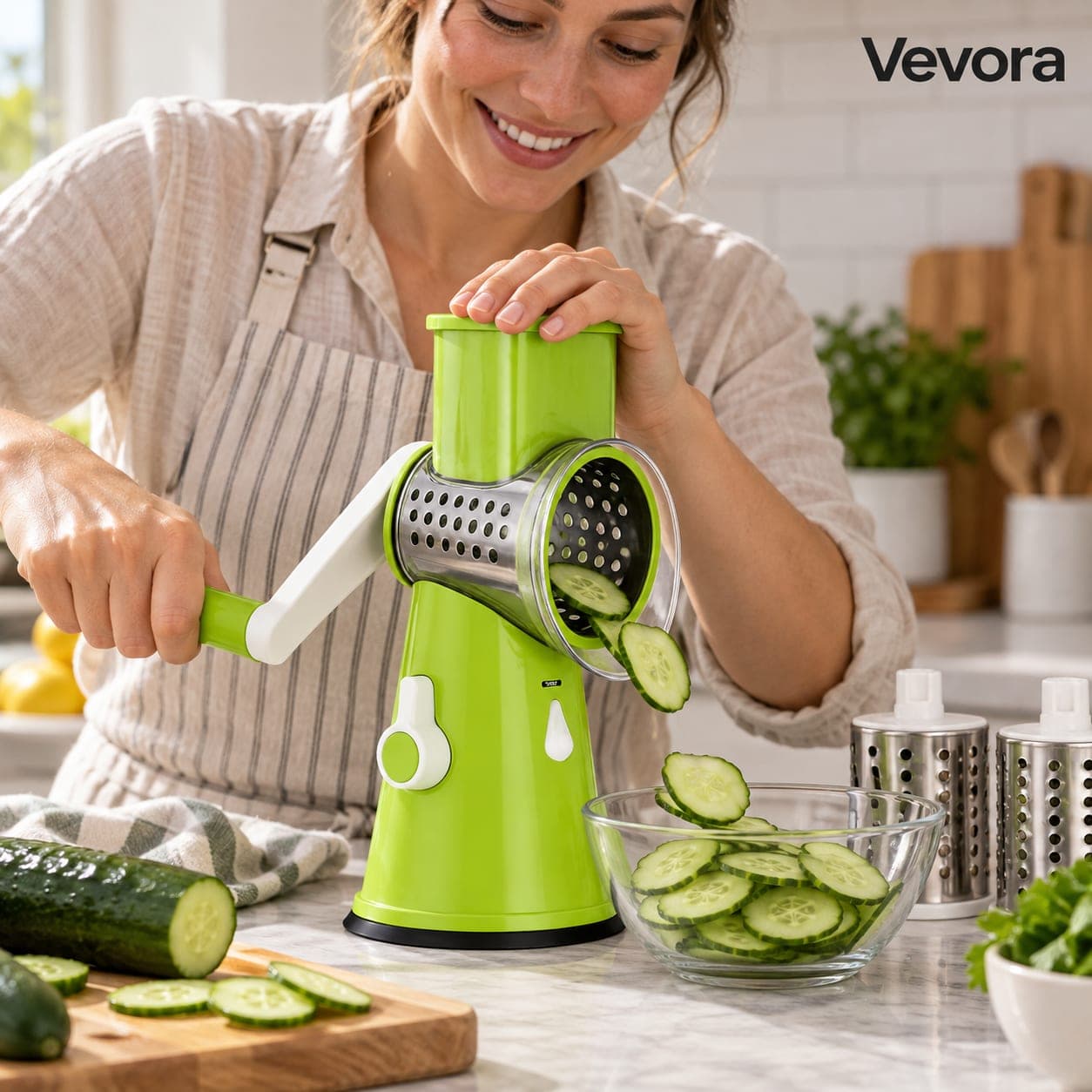
Hand-crank rotary grater with three drums
Get it between Tuesday 10 November and Thursday 12 November
No card: you pay the courier in cash.
Sold by Extrapy · Pay on delivery · WhatsApp
By law: 14 days to return your order · 3-year legal guarantee
What it does
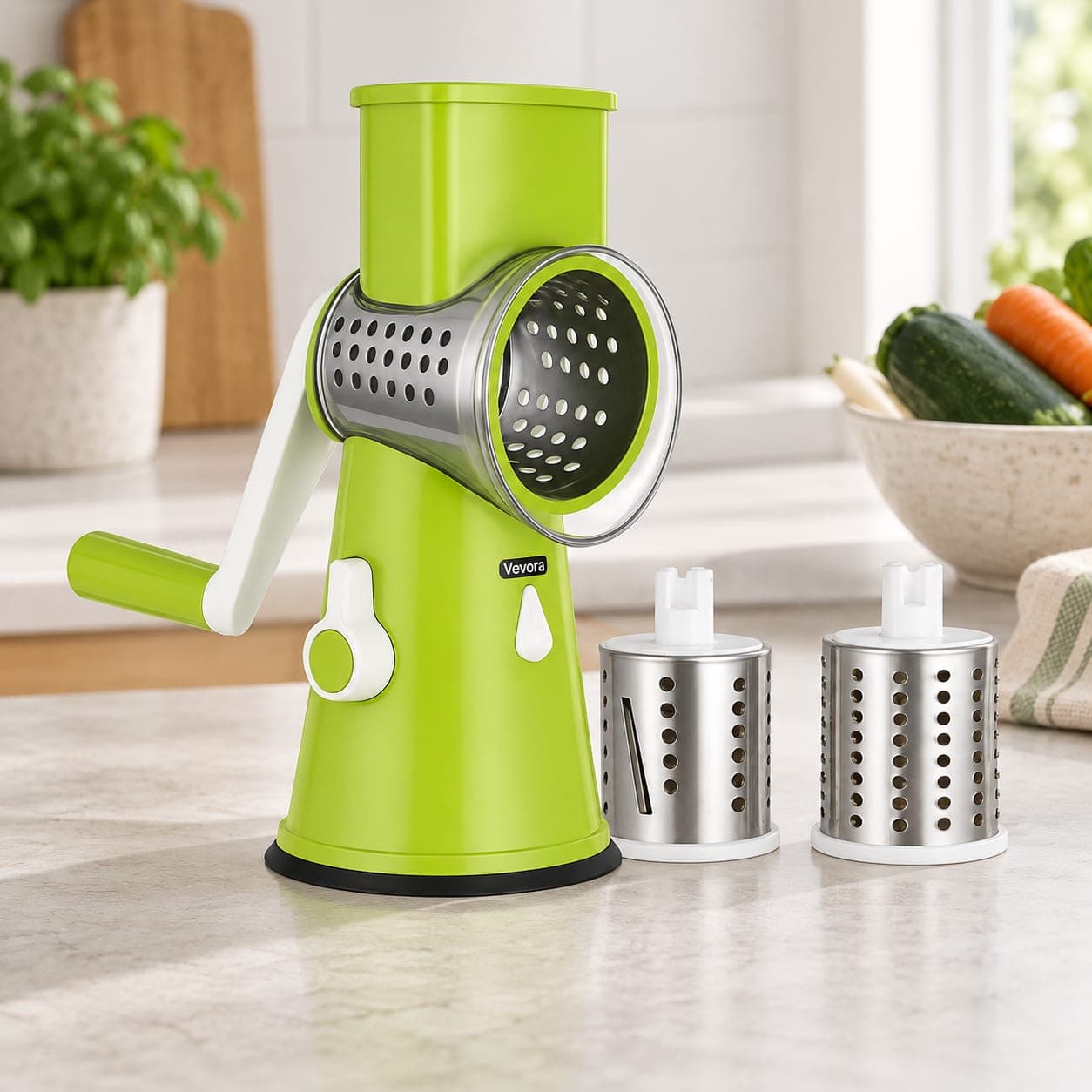
A manual rotary grater with a hand crank and three interchangeable drums: one for slices, one for coarse grating and one for fine grating. Food goes into the chute on top, you press it down with the pusher and it comes out of the open end of the drum into your own bowl or plate.
Specifications
| Product type | Manual rotary grater and slicer with hand crank |
|---|---|
| Drums | 3 interchangeable drums: slicing, coarse grating and fine grating |
| Body material | ABS plastic; suction base |
| Drum material | Stainless steel |
| Drum diameter | Approx. 7 cm |
| Dimensions | Approx. 26 × 12 × 24 cm (length with crank × width × height) |
| Weight | Approx. 600 g |
| Dishwasher | Drums and pusher dishwasher-safe, top rack; body with suction base, by hand |
| Colour | Green |
| Guarantee | 3-year legal guarantee |
What's in the box
- 1 Vevora grater with crank
- 3 steel drums: slicing, coarse grating and fine grating
- 1 pusher
- Instructions for use
Read the full description
Vevora is a hand-crank rotary grater: a green plastic body that stands on the worktop, with a feed chute on top and a steel drum that spins as you turn the crank. You drop the food into the chute, press it down with the pusher and it comes out grated or sliced from the open end of the drum, straight into your bowl or plate. It is for anyone who grates cheese often, makes salads or cooks for several people and would rather not run their knuckles over a flat grater.
A drum grater with three cuts
It comes with three interchangeable drums. The slicing drum cuts cucumber, courgette, potato or carrot into thin rounds. The coarse grating drum handles cheese for gratins, carrot for salad or potato for fritters. The fine grating drum turns hard cheese, nuts, chocolate or dry bread into small shreds. Changing drums takes a moment and needs no tools.
A hand-crank cheese grater that also grates nuts
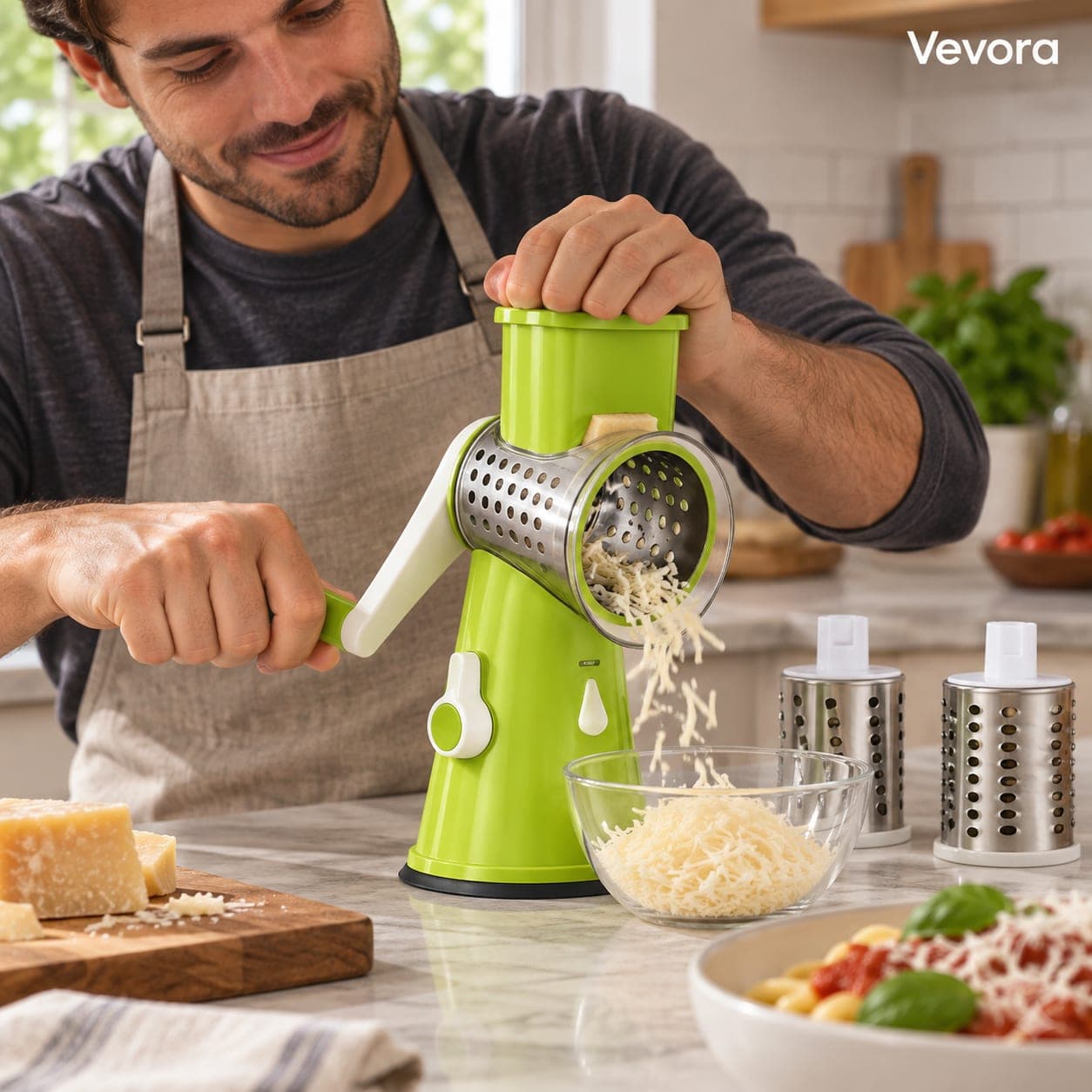
With firm or hard cheese, cold from the fridge, the shreds come out loose and drop straight onto the plate of pasta or into the oven dish. The fine drum also grates almonds, walnuts or hazelnuts for baking, a bar of chocolate for decorating and yesterday's bread for coating. Because the drum is open at the front, you put whatever container you like under the outlet, large or small.
A manual vegetable grater with a pusher
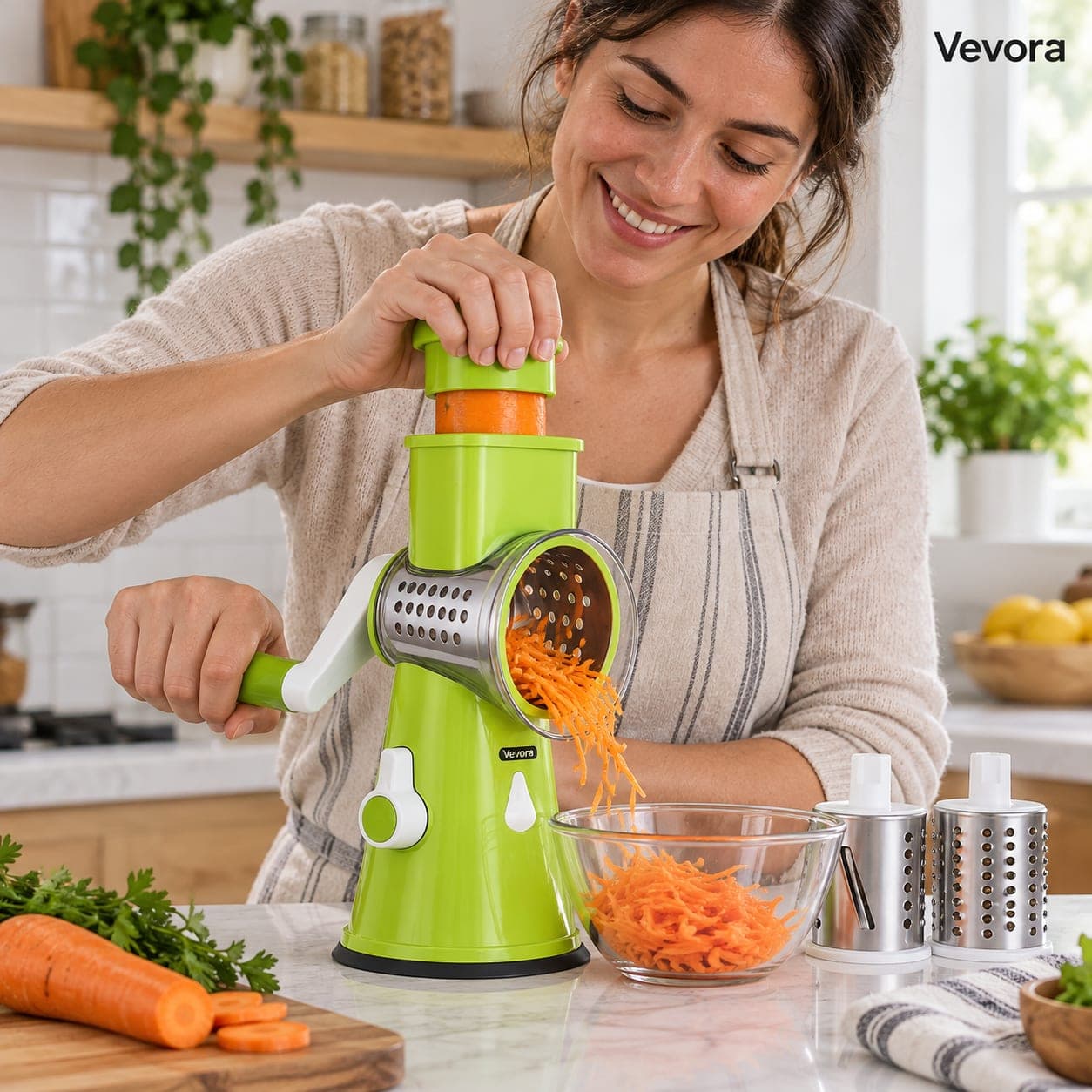
The feed chute is on top and the drum turns inside the body, so the hand that pushes never touches the part that cuts. The pusher fits into the chute and presses the food against the drum right down to the last piece. All you do is turn the crank with your other hand. Cucumber, carrot, courgette or potato have to fit through the chute: if they are wider, cut them into pieces beforehand.
A grater with a suction base for the worktop
A light grater tends to shift as you turn the crank. That is why the base has a suction cup that holds it to the worktop while you work with both hands. It grips well on smooth, clean surfaces such as glass, polished stone, steel or smooth laminate. On unvarnished wood, rough stone or tile joints it cannot form a seal and the grater moves; in that case, look for another surface or stand it on a smooth tray.
How to use it
Fix the base
Wipe and dry a smooth patch of worktop, stand the grater on it and lock the suction cup until it does not move.
Fit the drum
Choose the drum for the cut you want, slide it into the body and attach the crank.
Prepare the food
Cut the cheese or vegetable into pieces that fit through the chute and put a bowl or plate under the outlet.
Push and turn
Press down with the pusher, without forcing it, and turn the crank at a steady pace.
Cleaning and maintenance
Take out the drum and the pusher as soon as you finish, before the cheese or the potato starch dries on. Rinse the drum under the tap and brush it from the inside outwards; do not rub it with a sponge or your fingers, because the edges cut when you wash it too. Dry the parts before putting them away. The specifications table shows which parts are dishwasher-safe.
Frequently asked questions
What is each drum of the hand-crank rotary grater for?
The slicing drum cuts cucumber, courgette, carrot or potato into thin rounds. The coarse grating drum is the everyday one for gratin cheese, carrot or potato. The fine grating drum turns hard cheese, nuts, chocolate or dry bread into small shreds. All three change over without tools.
Which cheeses grate well in a hand-crank cheese grater?
Firm and hard cheeses, ideally straight from the fridge, which come out in loose shreds. Very soft or creamy cheeses smear over the drum and clog it instead of grating. If you want to grate a slightly soft cheese for a pizza, chill it in the freezer for a short while beforehand so it firms up.
Does it work as a nut grater and a chocolate grater?
Yes. With the fine drum you can grate almonds, walnuts or hazelnuts for cakes and coatings, and a bar of chocolate for decorating. Load a little at a time and turn without pressing too hard. The chocolate should be cold so it does not soften with the friction. It also grates dry bread into breadcrumbs.
Which worktops does a grater with a suction base grip?
Smooth, clean, dry surfaces: glass, steel, smooth laminate or polished stone. On untreated wood, porous stone or textured worktops the suction cup cannot form a seal and the grater moves as you turn the crank. If that happens, wipe the base and the worktop with a cloth and fix it again, or stand it on a smooth tray.
Do vegetables need cutting before using a manual vegetable grater?
Just the ones that do not fit through the feed chute. A carrot or a slim cucumber usually goes in whole; a large potato, a wide courgette or a big piece of cheese needs cutting beforehand. Stand the food upright in the chute, rest the pusher on top and turn the crank at a steady pace, without forcing it.
How do you clean a drum grater?
Take out the drum and the pusher as soon as you finish and rinse them before any residue dries on. Clean the drum with a brush, from the inside outwards, without running your fingers or a sponge over the edges. Dry everything before putting it away. The parts that are dishwasher-safe are listed in the specifications table.